Build a conspiracy theory from scratch.
The best way to learn to spot a conspiracy theory is to make one yourself.
Pick a real news story. On the next step you'll choose who's behind it and why. Then walk through the four moves real conspiracists use, with a debunk on every step.
- Hunt anomalies — turn coincidence into evidence of a secret plot.
- Fabricate connections — draw lines between unrelated dots until they look meaningful.
- Dismiss counter-evidence — if a fact disagrees, make the fact part of the cover-up.
- Discredit the critics — dismiss people who point out flaws in your theory.
Pick the event.
Choose whichever real-feeling headline your imagination will run wildest with. Don't overthink it.

Populist Support Declines in Europe
An annual YouGov-Cambridge Globalism Project survey, reported by The Guardian, finds that support for populist ideas has fallen across several European countries over the past three years. The survey measures attitudes like distrust of elites, favoring strong national control, and opposition to immigration. In the latest cycle, populist sentiment declined in ten European nations, indicating fewer people now express broad populist beliefs than in earlier years.

LHC Conspiracy Theories and Fears
In 2009 the Large Hadron Collider (LHC), a giant particle accelerator near Geneva run by CERN, was preparing to restart after upgrades. Scientists said the machine would smash protons together at very high energies to study fundamental particles and forces, potentially revealing phenomena such as the Higgs boson or signs of new physics. However, some members of the public expressed fear that the machine could produce catastrophic effects, including miniature black holes or other unknown dangers.
Google Search Update: UI Revamp
Google is expanding a tool called "Results about you," first introduced last year to help people remove personal information from Search results. The new version will actively scan the public web for instances of a user’s personal data and send alerts so they can request removal. Google says the feature is currently available in the United States in English and will be rolled out to more regions over time.
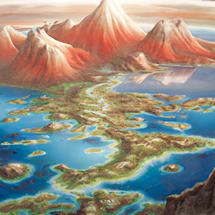
Lost continent discovered
Geoscientists have identified a largely submerged landmass called Zealandia, or Te Riu-a-Māui, that meets the criteria many researchers use for a continent. Covering about 1.89 million square miles (roughly 4.9 million square kilometres), Zealandia is mostly underwater — about 90–95 percent — and includes the visible islands of New Zealand and New Caledonia. Debate about its status grew over decades and many geologists accepted it as a continent in analyses published in recent years.