Build a conspiracy theory from scratch.
The best way to learn to spot a conspiracy theory is to make one yourself.
Pick a real news story. On the next step you'll choose who's behind it and why. Then walk through the four moves real conspiracists use, with a debunk on every step.
- Hunt anomalies — turn coincidence into evidence of a secret plot.
- Fabricate connections — draw lines between unrelated dots until they look meaningful.
- Dismiss counter-evidence — if a fact disagrees, make the fact part of the cover-up.
- Discredit the critics — dismiss people who point out flaws in your theory.
Pick the event.
Choose whichever real-feeling headline your imagination will run wildest with. Don't overthink it.

Meta seeks EU consent for ads
Meta, the company that owns Facebook and Instagram, says it will start asking users in the European Union for permission to show personalized advertising. The move follows regulatory rulings that challenged Meta’s data-collection methods for targeted ads. Rather than relying on a “legitimate interest” justification, Meta has conceded it must obtain explicit consent under EU data-protection rules before using people’s personal data to tailor ads on its platforms.

Irregular sleep linked to gut bacteria
Researchers at King’s College London have reported links between irregular sleep patterns and changes in the gut microbiome. The study focused on “social jet lag,” where people shift their sleep timing between workdays and free days. Even a 90‑minute difference in the midpoint of sleep was associated with a microbiome profile that other studies have connected to poorer health, and the team also found associations with diet quality, eating habits and inflammation.
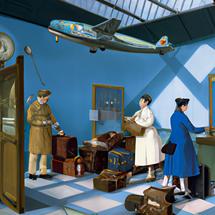
Airline to weigh passengers pre-flight.
South Korea's flag carrier Korean Air will begin weighing passengers and their carry-on luggage at Gimpo and Incheon airports. The Ministry of Land, Infrastructure and Transportation has required the checks to collect actual passenger weights for aircraft weight-and-balance calculations. Airline officials say measuring passengers helps crews calculate load distribution, takeoff performance, and fuel needs more accurately than relying on assumed average weights. Officials emphasize it is about technical calculations, not personal data collection.

Plants emit audible sounds when injured
Researchers led by Itzhak Khait at Tel Aviv University have found that some plants produce audible, high-frequency sounds when they are stressed or damaged. The team tested tomato and tobacco plants and recorded ultrasonic clicks that arise during drought stress or after cutting. Sensitive microphones and acoustic analysis allowed detection of these sounds from as far as five meters, suggesting plants may broadcast information about their physical condition.