Build a conspiracy theory from scratch.
The best way to learn to spot a conspiracy theory is to make one yourself.
Pick a real news story. On the next step you'll choose who's behind it and why. Then walk through the four moves real conspiracists use, with a debunk on every step.
- Hunt anomalies — turn coincidence into evidence of a secret plot.
- Fabricate connections — draw lines between unrelated dots until they look meaningful.
- Dismiss counter-evidence — if a fact disagrees, make the fact part of the cover-up.
- Discredit the critics — dismiss people who point out flaws in your theory.
Pick the event.
Choose whichever real-feeling headline your imagination will run wildest with. Don't overthink it.
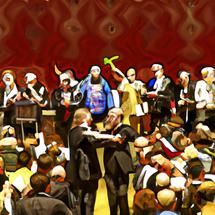
CPAC Europe embraces right-wing authoritarians
CPAC Hungary, the Budapest edition of the Conservative Political Action Conference, gathered American and European conservative activists, politicians, and commentators to discuss what organizers called the decline of Western civilization. Sessions focused on immigration, resistance to progressive social policies, and critiques of liberal democracy. Hungary’s prime minister Viktor Orbán was a prominent speaker, and some remarks echoed the “great replacement” language while emphasizing national sovereignty and cultural preservation.
Defining Western Feminism in 2023
New YouGov research across Western Europe and the United States finds a gap between people’s agreement with gender-equality principles and their willingness to call themselves 'feminists.' Respondents were randomly assigned one of three question formats: the word 'feminist' alone, a definition of feminist principles, or both. When asked the word alone, only 15–48% claimed the label; when given the definition, 74–91% endorsed equal rights, while the combined definition+word question produced 45–77% support.
Email from Russia
Garry Kasparov, the Russian-born former world chess champion, has publicly endorsed Anatoly Fomenko’s “New Chronology,” a radical revision of world history. Fomenko’s thesis argues that much of what we call ancient history is misdated or duplicated and that the actual historical timeline is far shorter than commonly believed. Kasparov says he finds the questions it raises important and plans to spend more time promoting these ideas as he moves away from professional chess.
Diller transformed architecture with innovation
Elizabeth Diller is a leading architect and founding partner of Diller Scofidio + Renfro, a firm known for projects that blur art, performance, and architecture. Trained at Cooper Union, she moved from visual art into architecture and co-authored the influential book Flesh, which challenged traditional ideas about buildings and spatial experience. Her work—including the High Line, the Blur Building, and The Shed—emphasizes experimentation, collaboration, and attention to how people use public space.