Build a conspiracy theory from scratch.
The best way to learn to spot a conspiracy theory is to make one yourself.
Pick a real news story. On the next step you'll choose who's behind it and why. Then walk through the four moves real conspiracists use, with a debunk on every step.
- Hunt anomalies — turn coincidence into evidence of a secret plot.
- Fabricate connections — draw lines between unrelated dots until they look meaningful.
- Dismiss counter-evidence — if a fact disagrees, make the fact part of the cover-up.
- Discredit the critics — dismiss people who point out flaws in your theory.
Pick the event.
Choose whichever real-feeling headline your imagination will run wildest with. Don't overthink it.
Google Search Update: UI Revamp
Google is expanding a tool called "Results about you," first introduced last year to help people remove personal information from Search results. The new version will actively scan the public web for instances of a user’s personal data and send alerts so they can request removal. Google says the feature is currently available in the United States in English and will be rolled out to more regions over time.
Wealthy Nations Urged to Contribute
A new international nature fund set up under the Global Environment Facility aims to help developing countries meet the biodiversity targets agreed at the COP15 summit in Montreal. The fund’s creation was one of the most-contentious issues at those talks, prompting walkouts and repeated negotiations between wealthy and poorer nations. So far, only Canada and the United Kingdom have pledged money, leaving roughly $40 million still needed to capitalise the fund ahead of COP16 next year.
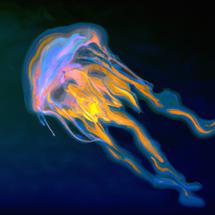
Oldest jellyfish species revealed in fossils
Scientists have identified Burgessomedusa phasmiformis as the oldest known swimming jellyfish, based on fossil specimens recovered from the Burgess Shale in Canada. These animals lived more than 500 million years ago during the Cambrian period. Researchers classify them as medusozoans, the group that includes modern jellyfish, and say the fossils provide direct evidence that jellyfish-like animals had already evolved by that time.
Diller transformed architecture with innovation
Elizabeth Diller is a leading architect and founding partner of Diller Scofidio + Renfro, a firm known for projects that blur art, performance, and architecture. Trained at Cooper Union, she moved from visual art into architecture and co-authored the influential book Flesh, which challenged traditional ideas about buildings and spatial experience. Her work—including the High Line, the Blur Building, and The Shed—emphasizes experimentation, collaboration, and attention to how people use public space.