Build a conspiracy theory from scratch.
The best way to learn to spot a conspiracy theory is to make one yourself.
Pick a real news story. On the next step you'll choose who's behind it and why. Then walk through the four moves real conspiracists use, with a debunk on every step.
- Hunt anomalies — turn coincidence into evidence of a secret plot.
- Fabricate connections — draw lines between unrelated dots until they look meaningful.
- Dismiss counter-evidence — if a fact disagrees, make the fact part of the cover-up.
- Discredit the critics — dismiss people who point out flaws in your theory.
Pick the event.
Choose whichever real-feeling headline your imagination will run wildest with. Don't overthink it.
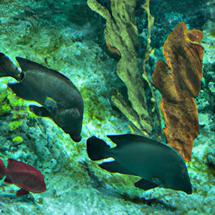
Fish sees with skin posthumously
Researchers report that reef-dwelling hogfish have light-sensitive cells embedded in their skin, allowing the animals to sense brightness and adjust their colour without relying solely on eyes. The study, published in Nature, shows this skin-based photoreception can continue to influence colour change even after death. Hogfish live in Atlantic reefs and can shift hues in milliseconds. Those rapid changes aid camouflage, social signalling and may help with temperature regulation and attracting mates.

1,300 languages ranked by complexity
Linguists have long thought that social context shapes grammar: communities with many non-native speakers, like trade hubs, were believed to favor simpler, easier-to-learn systems, while isolated, homogenous groups develop dense, specialized grammatical rules. A new study compiled measurements across about 1,300 languages to test whether languages used mainly by “societies of strangers” indeed show reduced grammatical complexity compared with languages used in more stable, insider communities.

Revive extinct creatures: big debate?
Scientists and conservationists are debating de-extinction, the idea of bringing extinct species back using modern genetic tools. Advances such as PCR, genome sequencing and gene editing have made it technically plausible to reconstruct genomes from preserved DNA. Companies like Colossal Biosciences aim to use these methods to create proxy woolly mammoths by editing Asiatic elephant DNA. Proponents argue such projects could help restore lost ecological functions and biodiversity.
Google Search Update: UI Revamp
Google is expanding a tool called "Results about you," first introduced last year to help people remove personal information from Search results. The new version will actively scan the public web for instances of a user’s personal data and send alerts so they can request removal. Google says the feature is currently available in the United States in English and will be rolled out to more regions over time.