Build a conspiracy theory from scratch.
The best way to learn to spot a conspiracy theory is to make one yourself.
Pick a real news story. On the next step you'll choose who's behind it and why. Then walk through the four moves real conspiracists use, with a debunk on every step.
- Hunt anomalies — turn coincidence into evidence of a secret plot.
- Fabricate connections — draw lines between unrelated dots until they look meaningful.
- Dismiss counter-evidence — if a fact disagrees, make the fact part of the cover-up.
- Discredit the critics — dismiss people who point out flaws in your theory.
Pick the event.
Choose whichever real-feeling headline your imagination will run wildest with. Don't overthink it.
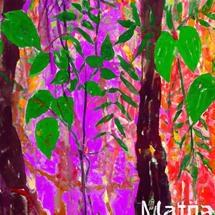
Plants emit audible sounds when injured
Researchers led by Itzhak Khait at Tel Aviv University have found that some plants produce audible, high-frequency sounds when they are stressed or damaged. The team tested tomato and tobacco plants and recorded ultrasonic clicks that arise during drought stress or after cutting. Sensitive microphones and acoustic analysis allowed detection of these sounds from as far as five meters, suggesting plants may broadcast information about their physical condition.
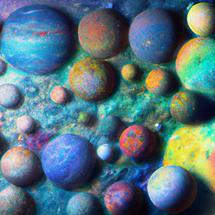
Ocean Materials from Outside Solar System
Harvard astronomer Avi Loeb says researchers recovered small metallic spheres from the Pacific Ocean in June and that the material came from outside our solar system. Loeb connects the spheres to an object that reportedly struck Earth in 2014 and argues their composition and structure are unusual enough to suggest an extraterrestrial, possibly technological, origin. The claim is presented as a potential example of interstellar material reaching Earth.
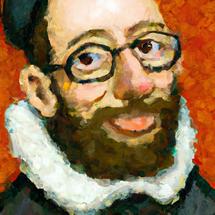
The Dictionary People" Review: Word-Loving Nerds
Sarah Ogilvie’s The Dictionary People tells the story of the people who built the Oxford English Dictionary by collecting words, quotations, and regional usages. Ogilvie, a linguist, shows that the OED was not made by a single team in isolation but by thousands of volunteers who sent slips of paper and examples from newspapers, books, and everyday speech. The book explains how this wide network of contributors helped record English across time and place.
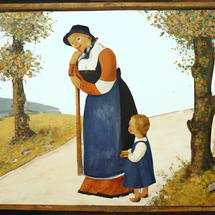
Mozart's Lullaby soothes pain in newborns
A recent study in New York, conducted between April 2019 and February 2020, tested whether recorded music could reduce pain in newborns during routine heel-prick blood tests. Researchers enrolled 100 infants and randomly assigned about half to listen to Mozart’s Lullaby before and during the procedure while the other infants received standard care without the music. Clinicians measured pain using standard scoring tools at baseline, during the prick, and after the procedure to compare responses.