Build a conspiracy theory from scratch.
The best way to learn to spot a conspiracy theory is to make one yourself.
Pick a real news story. On the next step you'll choose who's behind it and why. Then walk through the four moves real conspiracists use, with a debunk on every step.
- Hunt anomalies — turn coincidence into evidence of a secret plot.
- Fabricate connections — draw lines between unrelated dots until they look meaningful.
- Dismiss counter-evidence — if a fact disagrees, make the fact part of the cover-up.
- Discredit the critics — dismiss people who point out flaws in your theory.
Pick the event.
Choose whichever real-feeling headline your imagination will run wildest with. Don't overthink it.
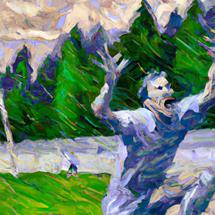
Footballer stole Munch's Scream painting
In 1994 Pål Enger, a former Norwegian footballer, carried out a high-profile theft of Edvard Munch's famous painting The Scream from the National Gallery in Oslo. Enger entered the museum and removed the canvas in a theft that quickly made international headlines. The painting is one of Munch's best-known works, and its disappearance drew intense media and police attention because of its cultural significance and the bold manner in which it was taken.

17th-century vampire child found in Poland
Archaeologists in Poland have uncovered the skeleton of a child from the 17th century in a graveyard near Dąbrowa Chełmińska. The body was interred face down, and a small triangular padlock was placed beneath the foot bones. Researchers interpret the unusual position and the lock as deliberate measures connected to local burial customs intended to prevent the deceased from returning to harm the living.

Naps Reflect Young Brain Development
During the 2020 lockdown, researchers at the University of East Anglia studied 463 infants aged about eight months to three years to examine nap habits and learning. They tested vocabulary and other cognitive measures and tracked how often and how long children slept. The study found that some children consolidated information during sleep and therefore napped less often, while others who had smaller vocabularies napped more frequently and for longer periods.

Plants emit audible sounds when injured
Researchers led by Itzhak Khait at Tel Aviv University have found that some plants produce audible, high-frequency sounds when they are stressed or damaged. The team tested tomato and tobacco plants and recorded ultrasonic clicks that arise during drought stress or after cutting. Sensitive microphones and acoustic analysis allowed detection of these sounds from as far as five meters, suggesting plants may broadcast information about their physical condition.