Build a conspiracy theory from scratch.
The best way to learn to spot a conspiracy theory is to make one yourself.
Pick a real news story. On the next step you'll choose who's behind it and why. Then walk through the four moves real conspiracists use, with a debunk on every step.
- Hunt anomalies — turn coincidence into evidence of a secret plot.
- Fabricate connections — draw lines between unrelated dots until they look meaningful.
- Dismiss counter-evidence — if a fact disagrees, make the fact part of the cover-up.
- Discredit the critics — dismiss people who point out flaws in your theory.
Pick the event.
Choose whichever real-feeling headline your imagination will run wildest with. Don't overthink it.
British doctor killed in Cape Town
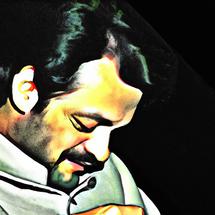
A 40-year-old British doctor touring South Africa was shot and killed in Cape Town after turning into Ntlangano Crescent during violent street protests, authorities said. The incident occurred last Thursday when the general practitioner took a different route after leaving the airport. Multiple unidentified suspects confronted him and opened fire; he did not survive. South African police confirmed the death and said they were investigating the circumstances and seeking the attackers.

The Dictionary People" Review: Word-Loving Nerds
Sarah Ogilvie’s The Dictionary People tells the story of the people who built the Oxford English Dictionary by collecting words, quotations, and regional usages. Ogilvie, a linguist, shows that the OED was not made by a single team in isolation but by thousands of volunteers who sent slips of paper and examples from newspapers, books, and everyday speech. The book explains how this wide network of contributors helped record English across time and place.
Ocean Materials from Outside Solar System
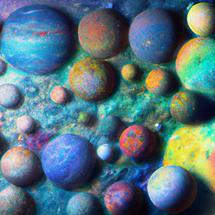
Harvard astronomer Avi Loeb says researchers recovered small metallic spheres from the Pacific Ocean in June and that the material came from outside our solar system. Loeb connects the spheres to an object that reportedly struck Earth in 2014 and argues their composition and structure are unusual enough to suggest an extraterrestrial, possibly technological, origin. The claim is presented as a potential example of interstellar material reaching Earth.
British adults prioritize celebrity knowledge
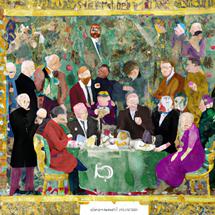
A recent poll of 2,000 British adults found many people follow celebrity news more closely than the lives of family and friends. Forty-four percent said they cared about trivial celebrity matters, and 80% admitted they knew more about celebrities than their own parents. Nearly half reported knowing more about famous people than about their friends. Sixty-one percent believe the media spends too much time on celebrity coverage.