Build a conspiracy theory from scratch.
The best way to learn to spot a conspiracy theory is to make one yourself.
Pick a real news story. On the next step you'll choose who's behind it and why. Then walk through the four moves real conspiracists use, with a debunk on every step.
- Hunt anomalies — turn coincidence into evidence of a secret plot.
- Fabricate connections — draw lines between unrelated dots until they look meaningful.
- Dismiss counter-evidence — if a fact disagrees, make the fact part of the cover-up.
- Discredit the critics — dismiss people who point out flaws in your theory.
Pick the event.
Choose whichever real-feeling headline your imagination will run wildest with. Don't overthink it.

Meta seeks EU consent for ads
Meta, the company that owns Facebook and Instagram, says it will start asking users in the European Union for permission to show personalized advertising. The move follows regulatory rulings that challenged Meta’s data-collection methods for targeted ads. Rather than relying on a “legitimate interest” justification, Meta has conceded it must obtain explicit consent under EU data-protection rules before using people’s personal data to tailor ads on its platforms.
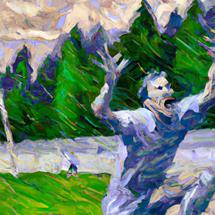
Footballer stole Munch's Scream painting
In 1994 Pål Enger, a former Norwegian footballer, carried out a high-profile theft of Edvard Munch's famous painting The Scream from the National Gallery in Oslo. Enger entered the museum and removed the canvas in a theft that quickly made international headlines. The painting is one of Munch's best-known works, and its disappearance drew intense media and police attention because of its cultural significance and the bold manner in which it was taken.

More work on domestic women's rights
A YouGov–Cambridge Globalism Project survey asked people in many Western countries whether more should be done to improve women’s rights at home. In several nations a clear majority or near-majority said yes. Italians topped the list at 62%, followed by Spaniards at 60%, Hungarians at 57% and Swedes at 56%. Other countries where roughly half of respondents expressed concern included Poland, France, Canada, Australia and Greece.

Australia warns of climate disruptions
An Australian thinktank, the Breakthrough National Centre for Climate Restoration, has warned federal politicians that climate change could cause widespread disruption across the Asia‑Pacific by mid‑century. Its briefing sketches scenarios including failed states, large movements of people fleeing uninhabitable areas, and growing competition for scarce resources such as fresh water. The group says these shifts could trigger regional instability, economic shocks and damage to critical infrastructure, underlining the scale of the risk.