Build a conspiracy theory from scratch.
The best way to learn to spot a conspiracy theory is to make one yourself.
Pick a real news story. On the next step you'll choose who's behind it and why. Then walk through the four moves real conspiracists use, with a debunk on every step.
- Hunt anomalies — turn coincidence into evidence of a secret plot.
- Fabricate connections — draw lines between unrelated dots until they look meaningful.
- Dismiss counter-evidence — if a fact disagrees, make the fact part of the cover-up.
- Discredit the critics — dismiss people who point out flaws in your theory.
Pick the event.
Choose whichever real-feeling headline your imagination will run wildest with. Don't overthink it.

CPAC Europe embraces right-wing authoritarians
CPAC Hungary, the Budapest edition of the Conservative Political Action Conference, gathered American and European conservative activists, politicians, and commentators to discuss what organizers called the decline of Western civilization. Sessions focused on immigration, resistance to progressive social policies, and critiques of liberal democracy. Hungary’s prime minister Viktor Orbán was a prominent speaker, and some remarks echoed the “great replacement” language while emphasizing national sovereignty and cultural preservation.
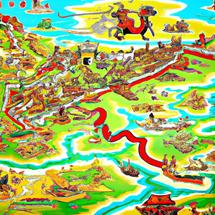
China's decline, America's reputation rises
The YouGov–Cambridge Globalism Project survey finds growing public willingness to support Taiwan if China used force. That backing is strongest in anglophone countries and visible in some other regions too. Respondents make distinctions between hard military assistance, like weapons and troops, and softer forms of support such as sanctions or humanitarian aid, so public readiness varies depending on the type of help and the perceived risks of intervention.
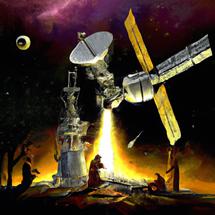
India launching Sun-bound spacecraft.
India’s space agency ISRO plans to launch Aditya-L1, a satellite designed to observe the Sun, on 2 September. The spacecraft will travel to the Sun–Earth Lagrange Point 1, about 1.5 million kilometres from Earth, where it can keep the Sun continuously in view. The mission follows India’s successful Chandrayaan-3 Moon landing and represents a major step in the country’s expanding space programme, aimed at improving understanding of solar activity.

China Urges UK Return Artifacts
China’s state-run Global Times published an editorial urging the British Museum to return Chinese artifacts just ahead of a visit by UK Foreign Secretary James Cleverly. The piece accused the museum of holding items acquired through improper channels and called some pieces “stolen.” The British Museum’s collection includes more than 23,000 Chinese objects, and the editorial named examples such as the painting The Admonitions of the Instructress to the Court Ladies and Liao tri-coloured luohan statues.