Build a conspiracy theory from scratch.
The best way to learn to spot a conspiracy theory is to make one yourself.
Pick a real news story. On the next step you'll choose who's behind it and why. Then walk through the four moves real conspiracists use, with a debunk on every step.
- Hunt anomalies — turn coincidence into evidence of a secret plot.
- Fabricate connections — draw lines between unrelated dots until they look meaningful.
- Dismiss counter-evidence — if a fact disagrees, make the fact part of the cover-up.
- Discredit the critics — dismiss people who point out flaws in your theory.
Pick the event.
Choose whichever real-feeling headline your imagination will run wildest with. Don't overthink it.
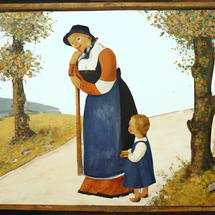
Mozart's Lullaby soothes pain in newborns
A recent study in New York, conducted between April 2019 and February 2020, tested whether recorded music could reduce pain in newborns during routine heel-prick blood tests. Researchers enrolled 100 infants and randomly assigned about half to listen to Mozart’s Lullaby before and during the procedure while the other infants received standard care without the music. Clinicians measured pain using standard scoring tools at baseline, during the prick, and after the procedure to compare responses.
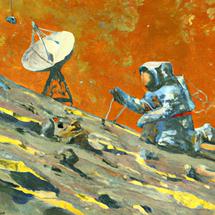
China's Moon discovery reveals hidden structures
China's Chang'e-4 lander touched down on the Moon's far side in January 2019. Using instruments including ground-penetrating radar, the mission collected subsurface profiles near its landing site. A team writing in the Journal of Geophysical Research: Planets reports the top roughly 130 feet (about 40 metres) of the surface is layered—alternating dust, soil and broken rock—and that a buried impact crater lies within those layers.
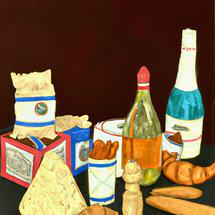
Ultra-processed foods increase health risks
Two new studies presented at the European Society of Cardiology’s annual meeting found links between consuming ultra-processed foods and higher risks of heart disease, including heart attacks and strokes. Ultra-processed foods are widely available consumer items such as fizzy drinks, many breakfast cereals, packaged snacks and ready-made meals. One analysis reported that a 10 percent increase in daily ultra-processed food intake was associated with about a 6 percent rise in risk of cardiovascular disease.
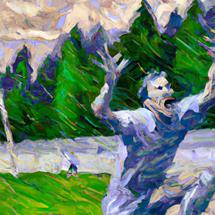
Footballer stole Munch's Scream painting
In 1994 Pål Enger, a former Norwegian footballer, carried out a high-profile theft of Edvard Munch's famous painting The Scream from the National Gallery in Oslo. Enger entered the museum and removed the canvas in a theft that quickly made international headlines. The painting is one of Munch's best-known works, and its disappearance drew intense media and police attention because of its cultural significance and the bold manner in which it was taken.