Build a conspiracy theory from scratch.
The best way to learn to spot a conspiracy theory is to make one yourself.
Pick a real news story. On the next step you'll choose who's behind it and why. Then walk through the four moves real conspiracists use, with a debunk on every step.
- Hunt anomalies — turn coincidence into evidence of a secret plot.
- Fabricate connections — draw lines between unrelated dots until they look meaningful.
- Dismiss counter-evidence — if a fact disagrees, make the fact part of the cover-up.
- Discredit the critics — dismiss people who point out flaws in your theory.
Pick the event.
Choose whichever real-feeling headline your imagination will run wildest with. Don't overthink it.
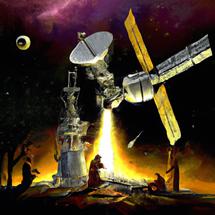
India launching Sun-bound spacecraft.
India’s space agency ISRO plans to launch Aditya-L1, a satellite designed to observe the Sun, on 2 September. The spacecraft will travel to the Sun–Earth Lagrange Point 1, about 1.5 million kilometres from Earth, where it can keep the Sun continuously in view. The mission follows India’s successful Chandrayaan-3 Moon landing and represents a major step in the country’s expanding space programme, aimed at improving understanding of solar activity.
LHC Conspiracy Theories and Fears
In 2009 the Large Hadron Collider (LHC), a giant particle accelerator near Geneva run by CERN, was preparing to restart after upgrades. Scientists said the machine would smash protons together at very high energies to study fundamental particles and forces, potentially revealing phenomena such as the Higgs boson or signs of new physics. However, some members of the public expressed fear that the machine could produce catastrophic effects, including miniature black holes or other unknown dangers.
Diller transformed architecture with innovation
Elizabeth Diller is a leading architect and founding partner of Diller Scofidio + Renfro, a firm known for projects that blur art, performance, and architecture. Trained at Cooper Union, she moved from visual art into architecture and co-authored the influential book Flesh, which challenged traditional ideas about buildings and spatial experience. Her work—including the High Line, the Blur Building, and The Shed—emphasizes experimentation, collaboration, and attention to how people use public space.
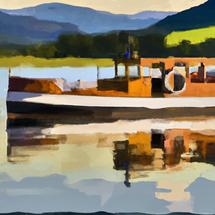
Loch Ness Monster search resumes
The Loch Ness search, described as the biggest in fifty years, took place over the weekend at Scotland’s Loch Ness. The Loch Ness Centre partnered with Loch Ness Exploration to run the operation and invited volunteers to join boat patrols that ran from about 10 a.m. to 6 p.m. Organizers set up 17 official spotting points around the loch and asked the public to report any unusual sightings to the survey team.