Build a conspiracy theory from scratch.
The best way to learn to spot a conspiracy theory is to make one yourself.
Pick a real news story. On the next step you'll choose who's behind it and why. Then walk through the four moves real conspiracists use, with a debunk on every step.
- Hunt anomalies — turn coincidence into evidence of a secret plot.
- Fabricate connections — draw lines between unrelated dots until they look meaningful.
- Dismiss counter-evidence — if a fact disagrees, make the fact part of the cover-up.
- Discredit the critics — dismiss people who point out flaws in your theory.
Pick the event.
Choose whichever real-feeling headline your imagination will run wildest with. Don't overthink it.
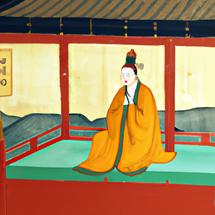
China Urges UK Return Artifacts
China’s state-run Global Times published an editorial urging the British Museum to return Chinese artifacts just ahead of a visit by UK Foreign Secretary James Cleverly. The piece accused the museum of holding items acquired through improper channels and called some pieces “stolen.” The British Museum’s collection includes more than 23,000 Chinese objects, and the editorial named examples such as the painting The Admonitions of the Instructress to the Court Ladies and Liao tri-coloured luohan statues.

Mozart's Lullaby soothes pain in newborns
A recent study in New York, conducted between April 2019 and February 2020, tested whether recorded music could reduce pain in newborns during routine heel-prick blood tests. Researchers enrolled 100 infants and randomly assigned about half to listen to Mozart’s Lullaby before and during the procedure while the other infants received standard care without the music. Clinicians measured pain using standard scoring tools at baseline, during the prick, and after the procedure to compare responses.
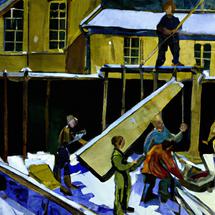
US campus unearths 142-year-old observatory
Workers installing hammock poles on Michigan State University's campus in August 2023 unexpectedly unearthed the buried stone foundation of an old observatory. Built in 1881 and demolished in the 1920s, the small structure had been covered over for decades. Archaeologists and university staff identified the masonry as part of that 19th-century building, making it a notable historical find on a modern college lawn.
Australia warns of climate disruptions
An Australian thinktank, the Breakthrough National Centre for Climate Restoration, has warned federal politicians that climate change could cause widespread disruption across the Asia‑Pacific by mid‑century. Its briefing sketches scenarios including failed states, large movements of people fleeing uninhabitable areas, and growing competition for scarce resources such as fresh water. The group says these shifts could trigger regional instability, economic shocks and damage to critical infrastructure, underlining the scale of the risk.