Build a conspiracy theory from scratch.
The best way to learn to spot a conspiracy theory is to make one yourself.
Pick a real news story. On the next step you'll choose who's behind it and why. Then walk through the four moves real conspiracists use, with a debunk on every step.
- Hunt anomalies — turn coincidence into evidence of a secret plot.
- Fabricate connections — draw lines between unrelated dots until they look meaningful.
- Dismiss counter-evidence — if a fact disagrees, make the fact part of the cover-up.
- Discredit the critics — dismiss people who point out flaws in your theory.
Pick the event.
Choose whichever real-feeling headline your imagination will run wildest with. Don't overthink it.
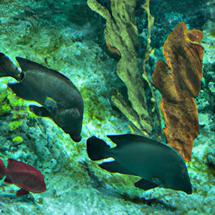
Fish sees with skin posthumously
Researchers report that reef-dwelling hogfish have light-sensitive cells embedded in their skin, allowing the animals to sense brightness and adjust their colour without relying solely on eyes. The study, published in Nature, shows this skin-based photoreception can continue to influence colour change even after death. Hogfish live in Atlantic reefs and can shift hues in milliseconds. Those rapid changes aid camouflage, social signalling and may help with temperature regulation and attracting mates.
Populist Support Declines in Europe
An annual YouGov-Cambridge Globalism Project survey, reported by The Guardian, finds that support for populist ideas has fallen across several European countries over the past three years. The survey measures attitudes like distrust of elites, favoring strong national control, and opposition to immigration. In the latest cycle, populist sentiment declined in ten European nations, indicating fewer people now express broad populist beliefs than in earlier years.
British adults prioritize celebrity knowledge
A recent poll of 2,000 British adults found many people follow celebrity news more closely than the lives of family and friends. Forty-four percent said they cared about trivial celebrity matters, and 80% admitted they knew more about celebrities than their own parents. Nearly half reported knowing more about famous people than about their friends. Sixty-one percent believe the media spends too much time on celebrity coverage.
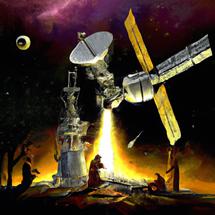
India launching Sun-bound spacecraft.
India’s space agency ISRO plans to launch Aditya-L1, a satellite designed to observe the Sun, on 2 September. The spacecraft will travel to the Sun–Earth Lagrange Point 1, about 1.5 million kilometres from Earth, where it can keep the Sun continuously in view. The mission follows India’s successful Chandrayaan-3 Moon landing and represents a major step in the country’s expanding space programme, aimed at improving understanding of solar activity.