Build a conspiracy theory from scratch.
The best way to learn to spot a conspiracy theory is to make one yourself.
Pick a real news story. On the next step you'll choose who's behind it and why. Then walk through the four moves real conspiracists use, with a debunk on every step.
- Hunt anomalies — turn coincidence into evidence of a secret plot.
- Fabricate connections — draw lines between unrelated dots until they look meaningful.
- Dismiss counter-evidence — if a fact disagrees, make the fact part of the cover-up.
- Discredit the critics — dismiss people who point out flaws in your theory.
Pick the event.
Choose whichever real-feeling headline your imagination will run wildest with. Don't overthink it.
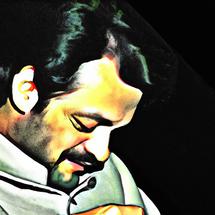
British doctor killed in Cape Town
A 40-year-old British doctor touring South Africa was shot and killed in Cape Town after turning into Ntlangano Crescent during violent street protests, authorities said. The incident occurred last Thursday when the general practitioner took a different route after leaving the airport. Multiple unidentified suspects confronted him and opened fire; he did not survive. South African police confirmed the death and said they were investigating the circumstances and seeking the attackers.
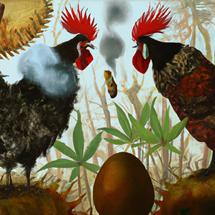
Cooking's chemical reaction aided life's origin
The Maillard reaction is the chemical process that browns food and creates complex flavors when we cook. New research led by Professor Caroline Peacock at the University of Leeds reports that a similar reaction can occur in the deep ocean. There, it converts small organic carbon molecules into larger, stable polymers. The study, published in Nature, estimates this process locks away roughly four million tonnes of organic carbon each year.
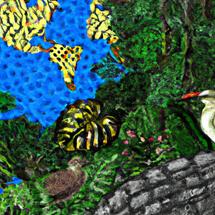
Wealthy Nations Urged to Contribute
A new international nature fund set up under the Global Environment Facility aims to help developing countries meet the biodiversity targets agreed at the COP15 summit in Montreal. The fund’s creation was one of the most-contentious issues at those talks, prompting walkouts and repeated negotiations between wealthy and poorer nations. So far, only Canada and the United Kingdom have pledged money, leaving roughly $40 million still needed to capitalise the fund ahead of COP16 next year.
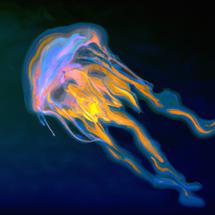
Oldest jellyfish species revealed in fossils
Scientists have identified Burgessomedusa phasmiformis as the oldest known swimming jellyfish, based on fossil specimens recovered from the Burgess Shale in Canada. These animals lived more than 500 million years ago during the Cambrian period. Researchers classify them as medusozoans, the group that includes modern jellyfish, and say the fossils provide direct evidence that jellyfish-like animals had already evolved by that time.