Build a conspiracy theory from scratch.
The best way to learn to spot a conspiracy theory is to make one yourself.
Pick a real news story. On the next step you'll choose who's behind it and why. Then walk through the four moves real conspiracists use, with a debunk on every step.
- Hunt anomalies — turn coincidence into evidence of a secret plot.
- Fabricate connections — draw lines between unrelated dots until they look meaningful.
- Dismiss counter-evidence — if a fact disagrees, make the fact part of the cover-up.
- Discredit the critics — dismiss people who point out flaws in your theory.
Pick the event.
Choose whichever real-feeling headline your imagination will run wildest with. Don't overthink it.
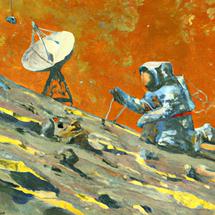
China's Moon discovery reveals hidden structures
China's Chang'e-4 lander touched down on the Moon's far side in January 2019. Using instruments including ground-penetrating radar, the mission collected subsurface profiles near its landing site. A team writing in the Journal of Geophysical Research: Planets reports the top roughly 130 feet (about 40 metres) of the surface is layered—alternating dust, soil and broken rock—and that a buried impact crater lies within those layers.
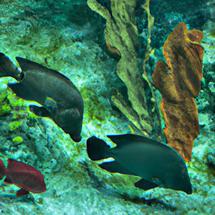
Fish sees with skin posthumously
Researchers report that reef-dwelling hogfish have light-sensitive cells embedded in their skin, allowing the animals to sense brightness and adjust their colour without relying solely on eyes. The study, published in Nature, shows this skin-based photoreception can continue to influence colour change even after death. Hogfish live in Atlantic reefs and can shift hues in milliseconds. Those rapid changes aid camouflage, social signalling and may help with temperature regulation and attracting mates.
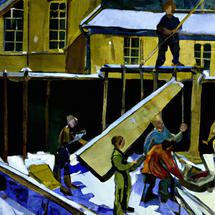
US campus unearths 142-year-old observatory
Workers installing hammock poles on Michigan State University's campus in August 2023 unexpectedly unearthed the buried stone foundation of an old observatory. Built in 1881 and demolished in the 1920s, the small structure had been covered over for decades. Archaeologists and university staff identified the masonry as part of that 19th-century building, making it a notable historical find on a modern college lawn.
Pandemic led to varied changes
Research compiled by YouGov shows that the COVID-19 pandemic prompted different changes in daily routines around the world. In some places people slept more—Saudi Arabia, Brazil, China and Turkey reported increases—while Australians and Britons admitted to drinking more and residents of Mexico, Brazil and Spain reported cutting back on alcohol. Exercise rose in countries including China, Saudi Arabia, Mexico and the United States, and various nations reported shifts in diet quality.