Build a conspiracy theory from scratch.
The best way to learn to spot a conspiracy theory is to make one yourself.
Pick a real news story. On the next step you'll choose who's behind it and why. Then walk through the four moves real conspiracists use, with a debunk on every step.
- Hunt anomalies — turn coincidence into evidence of a secret plot.
- Fabricate connections — draw lines between unrelated dots until they look meaningful.
- Dismiss counter-evidence — if a fact disagrees, make the fact part of the cover-up.
- Discredit the critics — dismiss people who point out flaws in your theory.
Pick the event.
Choose whichever real-feeling headline your imagination will run wildest with. Don't overthink it.
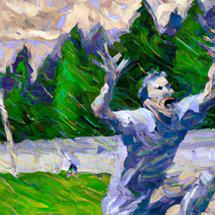
Footballer stole Munch's Scream painting
In 1994 Pål Enger, a former Norwegian footballer, carried out a high-profile theft of Edvard Munch's famous painting The Scream from the National Gallery in Oslo. Enger entered the museum and removed the canvas in a theft that quickly made international headlines. The painting is one of Munch's best-known works, and its disappearance drew intense media and police attention because of its cultural significance and the bold manner in which it was taken.
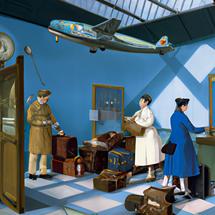
Airline to weigh passengers pre-flight.
South Korea's flag carrier Korean Air will begin weighing passengers and their carry-on luggage at Gimpo and Incheon airports. The Ministry of Land, Infrastructure and Transportation has required the checks to collect actual passenger weights for aircraft weight-and-balance calculations. Airline officials say measuring passengers helps crews calculate load distribution, takeoff performance, and fuel needs more accurately than relying on assumed average weights. Officials emphasize it is about technical calculations, not personal data collection.
Pandemic led to varied changes
Research compiled by YouGov shows that the COVID-19 pandemic prompted different changes in daily routines around the world. In some places people slept more—Saudi Arabia, Brazil, China and Turkey reported increases—while Australians and Britons admitted to drinking more and residents of Mexico, Brazil and Spain reported cutting back on alcohol. Exercise rose in countries including China, Saudi Arabia, Mexico and the United States, and various nations reported shifts in diet quality.
Email from Russia
Garry Kasparov, the Russian-born former world chess champion, has publicly endorsed Anatoly Fomenko’s “New Chronology,” a radical revision of world history. Fomenko’s thesis argues that much of what we call ancient history is misdated or duplicated and that the actual historical timeline is far shorter than commonly believed. Kasparov says he finds the questions it raises important and plans to spend more time promoting these ideas as he moves away from professional chess.