Build a conspiracy theory from scratch.
The best way to learn to spot a conspiracy theory is to make one yourself.
Pick a real news story. On the next step you'll choose who's behind it and why. Then walk through the four moves real conspiracists use, with a debunk on every step.
- Hunt anomalies — turn coincidence into evidence of a secret plot.
- Fabricate connections — draw lines between unrelated dots until they look meaningful.
- Dismiss counter-evidence — if a fact disagrees, make the fact part of the cover-up.
- Discredit the critics — dismiss people who point out flaws in your theory.
Pick the event.
Choose whichever real-feeling headline your imagination will run wildest with. Don't overthink it.

Robots replace talent scouts in music industry crisis
For decades the music industry relied on A&R scouts—talent spotters who traveled to clubs, small venues and local gigs looking for acts with hit potential. In recent years that search has moved online as social media and streaming platforms such as TikTok and Spotify let artists reach large audiences without labels. Record companies now monitor streams, follower growth and viral trends to decide where to invest, changing how new talent is discovered and promoted.

Many Europeans Want to End Daylight Saving Time
As clocks move forward each spring across the northern hemisphere, debates over daylight saving time continue in several Western European countries. YouGov's Eurotrack survey asked people in Britain, Denmark, France, Germany, Italy, Spain and Sweden whether their country should stop switching clocks twice a year. Responses vary widely: 75% of Germans want to end the practice, while Italy is the only country where a majority (56%) prefers to keep changing the clocks. Britain and Spain were narrowly divided on the question.

US campus unearths 142-year-old observatory
Workers installing hammock poles on Michigan State University's campus in August 2023 unexpectedly unearthed the buried stone foundation of an old observatory. Built in 1881 and demolished in the 1920s, the small structure had been covered over for decades. Archaeologists and university staff identified the masonry as part of that 19th-century building, making it a notable historical find on a modern college lawn.
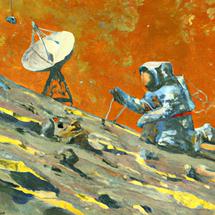
China's Moon discovery reveals hidden structures
China's Chang'e-4 lander touched down on the Moon's far side in January 2019. Using instruments including ground-penetrating radar, the mission collected subsurface profiles near its landing site. A team writing in the Journal of Geophysical Research: Planets reports the top roughly 130 feet (about 40 metres) of the surface is layered—alternating dust, soil and broken rock—and that a buried impact crater lies within those layers.