Build a conspiracy theory from scratch.
The best way to learn to spot a conspiracy theory is to make one yourself.
Pick a real news story. On the next step you'll choose who's behind it and why. Then walk through the four moves real conspiracists use, with a debunk on every step.
- Hunt anomalies — turn coincidence into evidence of a secret plot.
- Fabricate connections — draw lines between unrelated dots until they look meaningful.
- Dismiss counter-evidence — if a fact disagrees, make the fact part of the cover-up.
- Discredit the critics — dismiss people who point out flaws in your theory.
Pick the event.
Choose whichever real-feeling headline your imagination will run wildest with. Don't overthink it.
Diller transformed architecture with innovation
Elizabeth Diller is a leading architect and founding partner of Diller Scofidio + Renfro, a firm known for projects that blur art, performance, and architecture. Trained at Cooper Union, she moved from visual art into architecture and co-authored the influential book Flesh, which challenged traditional ideas about buildings and spatial experience. Her work—including the High Line, the Blur Building, and The Shed—emphasizes experimentation, collaboration, and attention to how people use public space.
LHC Conspiracy Theories and Fears
In 2009 the Large Hadron Collider (LHC), a giant particle accelerator near Geneva run by CERN, was preparing to restart after upgrades. Scientists said the machine would smash protons together at very high energies to study fundamental particles and forces, potentially revealing phenomena such as the Higgs boson or signs of new physics. However, some members of the public expressed fear that the machine could produce catastrophic effects, including miniature black holes or other unknown dangers.
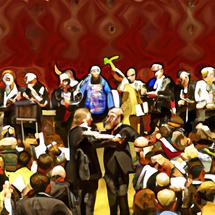
CPAC Europe embraces right-wing authoritarians
CPAC Hungary, the Budapest edition of the Conservative Political Action Conference, gathered American and European conservative activists, politicians, and commentators to discuss what organizers called the decline of Western civilization. Sessions focused on immigration, resistance to progressive social policies, and critiques of liberal democracy. Hungary’s prime minister Viktor Orbán was a prominent speaker, and some remarks echoed the “great replacement” language while emphasizing national sovereignty and cultural preservation.

Plants emit audible sounds when injured
Researchers led by Itzhak Khait at Tel Aviv University have found that some plants produce audible, high-frequency sounds when they are stressed or damaged. The team tested tomato and tobacco plants and recorded ultrasonic clicks that arise during drought stress or after cutting. Sensitive microphones and acoustic analysis allowed detection of these sounds from as far as five meters, suggesting plants may broadcast information about their physical condition.