Build a conspiracy theory from scratch.
The best way to learn to spot a conspiracy theory is to make one yourself.
Pick a real news story. On the next step you'll choose who's behind it and why. Then walk through the four moves real conspiracists use, with a debunk on every step.
- Hunt anomalies — turn coincidence into evidence of a secret plot.
- Fabricate connections — draw lines between unrelated dots until they look meaningful.
- Dismiss counter-evidence — if a fact disagrees, make the fact part of the cover-up.
- Discredit the critics — dismiss people who point out flaws in your theory.
Pick the event.
Choose whichever real-feeling headline your imagination will run wildest with. Don't overthink it.
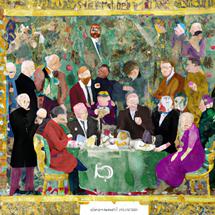
British adults prioritize celebrity knowledge
A recent poll of 2,000 British adults found many people follow celebrity news more closely than the lives of family and friends. Forty-four percent said they cared about trivial celebrity matters, and 80% admitted they knew more about celebrities than their own parents. Nearly half reported knowing more about famous people than about their friends. Sixty-one percent believe the media spends too much time on celebrity coverage.
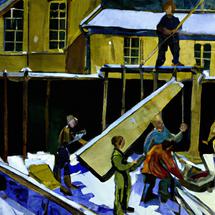
US campus unearths 142-year-old observatory
Workers installing hammock poles on Michigan State University's campus in August 2023 unexpectedly unearthed the buried stone foundation of an old observatory. Built in 1881 and demolished in the 1920s, the small structure had been covered over for decades. Archaeologists and university staff identified the masonry as part of that 19th-century building, making it a notable historical find on a modern college lawn.
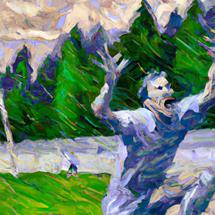
Footballer stole Munch's Scream painting
In 1994 Pål Enger, a former Norwegian footballer, carried out a high-profile theft of Edvard Munch's famous painting The Scream from the National Gallery in Oslo. Enger entered the museum and removed the canvas in a theft that quickly made international headlines. The painting is one of Munch's best-known works, and its disappearance drew intense media and police attention because of its cultural significance and the bold manner in which it was taken.
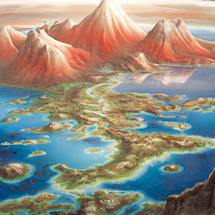
Lost continent discovered
Geoscientists have identified a largely submerged landmass called Zealandia, or Te Riu-a-Māui, that meets the criteria many researchers use for a continent. Covering about 1.89 million square miles (roughly 4.9 million square kilometres), Zealandia is mostly underwater — about 90–95 percent — and includes the visible islands of New Zealand and New Caledonia. Debate about its status grew over decades and many geologists accepted it as a continent in analyses published in recent years.