Build a conspiracy theory from scratch.
The best way to learn to spot a conspiracy theory is to make one yourself.
Pick a real news story. On the next step you'll choose who's behind it and why. Then walk through the four moves real conspiracists use, with a debunk on every step.
- Hunt anomalies — turn coincidence into evidence of a secret plot.
- Fabricate connections — draw lines between unrelated dots until they look meaningful.
- Dismiss counter-evidence — if a fact disagrees, make the fact part of the cover-up.
- Discredit the critics — dismiss people who point out flaws in your theory.
Pick the event.
Choose whichever real-feeling headline your imagination will run wildest with. Don't overthink it.
Australia warns of climate disruptions
An Australian thinktank, the Breakthrough National Centre for Climate Restoration, has warned federal politicians that climate change could cause widespread disruption across the Asia‑Pacific by mid‑century. Its briefing sketches scenarios including failed states, large movements of people fleeing uninhabitable areas, and growing competition for scarce resources such as fresh water. The group says these shifts could trigger regional instability, economic shocks and damage to critical infrastructure, underlining the scale of the risk.

Jagger: Rock legend turned "Instagram Normie
Mick Jagger, the longtime frontman of the Rolling Stones, has been sharing unexpectedly ordinary moments from his tour life on Instagram. Instead of the usual glamorous or staged celebrity photos, his feed shows mundane outings—visits to local attractions, bars, strip malls and well‑known landmarks. He told The Washington Post that these images are less about spectacle and more about getting a feel for places, and he treats the account like a simple visual diary.
British adults prioritize celebrity knowledge
A recent poll of 2,000 British adults found many people follow celebrity news more closely than the lives of family and friends. Forty-four percent said they cared about trivial celebrity matters, and 80% admitted they knew more about celebrities than their own parents. Nearly half reported knowing more about famous people than about their friends. Sixty-one percent believe the media spends too much time on celebrity coverage.
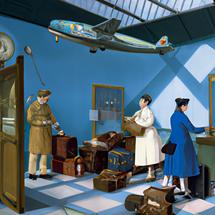
Airline to weigh passengers pre-flight.
South Korea's flag carrier Korean Air will begin weighing passengers and their carry-on luggage at Gimpo and Incheon airports. The Ministry of Land, Infrastructure and Transportation has required the checks to collect actual passenger weights for aircraft weight-and-balance calculations. Airline officials say measuring passengers helps crews calculate load distribution, takeoff performance, and fuel needs more accurately than relying on assumed average weights. Officials emphasize it is about technical calculations, not personal data collection.