Build a conspiracy theory from scratch.
The best way to learn to spot a conspiracy theory is to make one yourself.
Pick a real news story. On the next step you'll choose who's behind it and why. Then walk through the four moves real conspiracists use, with a debunk on every step.
- Hunt anomalies — turn coincidence into evidence of a secret plot.
- Fabricate connections — draw lines between unrelated dots until they look meaningful.
- Dismiss counter-evidence — if a fact disagrees, make the fact part of the cover-up.
- Discredit the critics — dismiss people who point out flaws in your theory.
Pick the event.
Choose whichever real-feeling headline your imagination will run wildest with. Don't overthink it.

Film's production plagued by misfortune
William Friedkin’s 1977 film Sorcerer is a tense thriller about four desperate men hired to transport highly unstable explosives across dangerous, remote roads. Inspired by Georges Arnaud’s novel and echoing the earlier French film The Wages of Fear, Sorcerer aimed for a raw, realistic tone. Friedkin, fresh from the success of The Exorcist, pushed for authentic locations and intense performances to heighten the film’s unrelenting atmosphere.
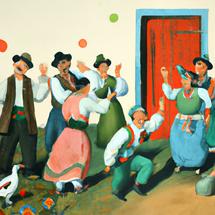
Laughter benefits heart health significantly
Researchers presented new findings at the European Society of Cardiology meeting showing that laughter therapy can improve some measures of heart health in people with coronary artery disease. In the study, patients took part in guided laughter sessions while researchers measured inflammation markers and cardiovascular performance before and after. The reported results included lower inflammation and improved indicators of heart function after the laughter interventions.
1,300 languages ranked by complexity
Linguists have long thought that social context shapes grammar: communities with many non-native speakers, like trade hubs, were believed to favor simpler, easier-to-learn systems, while isolated, homogenous groups develop dense, specialized grammatical rules. A new study compiled measurements across about 1,300 languages to test whether languages used mainly by “societies of strangers” indeed show reduced grammatical complexity compared with languages used in more stable, insider communities.

Naps Reflect Young Brain Development
During the 2020 lockdown, researchers at the University of East Anglia studied 463 infants aged about eight months to three years to examine nap habits and learning. They tested vocabulary and other cognitive measures and tracked how often and how long children slept. The study found that some children consolidated information during sleep and therefore napped less often, while others who had smaller vocabularies napped more frequently and for longer periods.