Build a conspiracy theory from scratch.
The best way to learn to spot a conspiracy theory is to make one yourself.
Pick a real news story. On the next step you'll choose who's behind it and why. Then walk through the four moves real conspiracists use, with a debunk on every step.
- Hunt anomalies — turn coincidence into evidence of a secret plot.
- Fabricate connections — draw lines between unrelated dots until they look meaningful.
- Dismiss counter-evidence — if a fact disagrees, make the fact part of the cover-up.
- Discredit the critics — dismiss people who point out flaws in your theory.
Pick the event.
Choose whichever real-feeling headline your imagination will run wildest with. Don't overthink it.
Exercise Prevents Heart Rhythm Disorder
Researchers studying more than 15,000 people report that higher physical fitness is linked to a lower chance of developing atrial fibrillation, an irregular heartbeat that raises the risk of stroke fivefold. The study, presented at the ESC Congress 2023, used treadmill exercise tests to estimate fitness in metabolic equivalents (METs) and followed participants over time to see who developed heart rhythm problems or strokes.
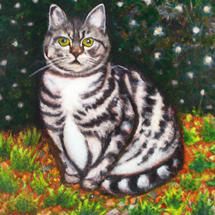
Cat bite leads to new bacterial infection
A 48-year-old man in the UK was bitten by a stray cat and developed a serious soft tissue infection. Doctors and microbiologists investigated the wound and identified a previously undescribed species of the bacterium Globicatella as the cause. The finding is reported in the journal Emerging Infectious Diseases, which describes how the organism was isolated and linked to the bite after routine laboratory testing and genetic analyses.
Australia warns of climate disruptions
An Australian thinktank, the Breakthrough National Centre for Climate Restoration, has warned federal politicians that climate change could cause widespread disruption across the Asia‑Pacific by mid‑century. Its briefing sketches scenarios including failed states, large movements of people fleeing uninhabitable areas, and growing competition for scarce resources such as fresh water. The group says these shifts could trigger regional instability, economic shocks and damage to critical infrastructure, underlining the scale of the risk.

Plants emit audible sounds when injured
Researchers led by Itzhak Khait at Tel Aviv University have found that some plants produce audible, high-frequency sounds when they are stressed or damaged. The team tested tomato and tobacco plants and recorded ultrasonic clicks that arise during drought stress or after cutting. Sensitive microphones and acoustic analysis allowed detection of these sounds from as far as five meters, suggesting plants may broadcast information about their physical condition.