Build a conspiracy theory from scratch.
The best way to learn to spot a conspiracy theory is to make one yourself.
Pick a real news story. On the next step you'll choose who's behind it and why. Then walk through the four moves real conspiracists use, with a debunk on every step.
- Hunt anomalies — turn coincidence into evidence of a secret plot.
- Fabricate connections — draw lines between unrelated dots until they look meaningful.
- Dismiss counter-evidence — if a fact disagrees, make the fact part of the cover-up.
- Discredit the critics — dismiss people who point out flaws in your theory.
Pick the event.
Choose whichever real-feeling headline your imagination will run wildest with. Don't overthink it.

Revive extinct creatures: big debate?
Scientists and conservationists are debating de-extinction, the idea of bringing extinct species back using modern genetic tools. Advances such as PCR, genome sequencing and gene editing have made it technically plausible to reconstruct genomes from preserved DNA. Companies like Colossal Biosciences aim to use these methods to create proxy woolly mammoths by editing Asiatic elephant DNA. Proponents argue such projects could help restore lost ecological functions and biodiversity.
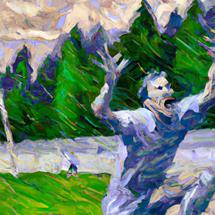
Footballer stole Munch's Scream painting
In 1994 Pål Enger, a former Norwegian footballer, carried out a high-profile theft of Edvard Munch's famous painting The Scream from the National Gallery in Oslo. Enger entered the museum and removed the canvas in a theft that quickly made international headlines. The painting is one of Munch's best-known works, and its disappearance drew intense media and police attention because of its cultural significance and the bold manner in which it was taken.
1,300 languages ranked by complexity
Linguists have long thought that social context shapes grammar: communities with many non-native speakers, like trade hubs, were believed to favor simpler, easier-to-learn systems, while isolated, homogenous groups develop dense, specialized grammatical rules. A new study compiled measurements across about 1,300 languages to test whether languages used mainly by “societies of strangers” indeed show reduced grammatical complexity compared with languages used in more stable, insider communities.

Loch Ness Monster search resumes
The Loch Ness search, described as the biggest in fifty years, took place over the weekend at Scotland’s Loch Ness. The Loch Ness Centre partnered with Loch Ness Exploration to run the operation and invited volunteers to join boat patrols that ran from about 10 a.m. to 6 p.m. Organizers set up 17 official spotting points around the loch and asked the public to report any unusual sightings to the survey team.