Build a conspiracy theory from scratch.
The best way to learn to spot a conspiracy theory is to make one yourself.
Pick a real news story. On the next step you'll choose who's behind it and why. Then walk through the four moves real conspiracists use, with a debunk on every step.
- Hunt anomalies — turn coincidence into evidence of a secret plot.
- Fabricate connections — draw lines between unrelated dots until they look meaningful.
- Dismiss counter-evidence — if a fact disagrees, make the fact part of the cover-up.
- Discredit the critics — dismiss people who point out flaws in your theory.
Pick the event.
Choose whichever real-feeling headline your imagination will run wildest with. Don't overthink it.
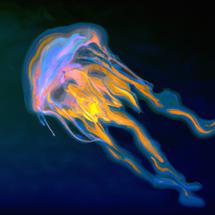
Oldest jellyfish species revealed in fossils
Scientists have identified Burgessomedusa phasmiformis as the oldest known swimming jellyfish, based on fossil specimens recovered from the Burgess Shale in Canada. These animals lived more than 500 million years ago during the Cambrian period. Researchers classify them as medusozoans, the group that includes modern jellyfish, and say the fossils provide direct evidence that jellyfish-like animals had already evolved by that time.
Australia warns of climate disruptions
An Australian thinktank, the Breakthrough National Centre for Climate Restoration, has warned federal politicians that climate change could cause widespread disruption across the Asia‑Pacific by mid‑century. Its briefing sketches scenarios including failed states, large movements of people fleeing uninhabitable areas, and growing competition for scarce resources such as fresh water. The group says these shifts could trigger regional instability, economic shocks and damage to critical infrastructure, underlining the scale of the risk.

The Dictionary People" Review: Word-Loving Nerds
Sarah Ogilvie’s The Dictionary People tells the story of the people who built the Oxford English Dictionary by collecting words, quotations, and regional usages. Ogilvie, a linguist, shows that the OED was not made by a single team in isolation but by thousands of volunteers who sent slips of paper and examples from newspapers, books, and everyday speech. The book explains how this wide network of contributors helped record English across time and place.
Global Views on American Cultural Influence
A YouGov survey carried out in nine countries across Europe, Australia and Singapore measured public views on American cultural influence. The study found that most people recognize U.S. impact in entertainment: 66% to 89% of respondents said American movies, television and music shape their local culture. Roughly half also reported significant American influence in news media, national political norms, everyday language and consumer brands, showing that perceptions extend beyond entertainment.