Build a conspiracy theory from scratch.
The best way to learn to spot a conspiracy theory is to make one yourself.
Pick a real news story. On the next step you'll choose who's behind it and why. Then walk through the four moves real conspiracists use, with a debunk on every step.
- Hunt anomalies — turn coincidence into evidence of a secret plot.
- Fabricate connections — draw lines between unrelated dots until they look meaningful.
- Dismiss counter-evidence — if a fact disagrees, make the fact part of the cover-up.
- Discredit the critics — dismiss people who point out flaws in your theory.
Pick the event.
Choose whichever real-feeling headline your imagination will run wildest with. Don't overthink it.

Exercise Prevents Heart Rhythm Disorder
Researchers studying more than 15,000 people report that higher physical fitness is linked to a lower chance of developing atrial fibrillation, an irregular heartbeat that raises the risk of stroke fivefold. The study, presented at the ESC Congress 2023, used treadmill exercise tests to estimate fitness in metabolic equivalents (METs) and followed participants over time to see who developed heart rhythm problems or strokes.
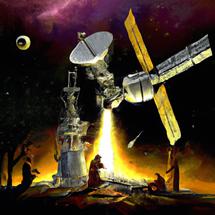
India launching Sun-bound spacecraft.
India’s space agency ISRO plans to launch Aditya-L1, a satellite designed to observe the Sun, on 2 September. The spacecraft will travel to the Sun–Earth Lagrange Point 1, about 1.5 million kilometres from Earth, where it can keep the Sun continuously in view. The mission follows India’s successful Chandrayaan-3 Moon landing and represents a major step in the country’s expanding space programme, aimed at improving understanding of solar activity.

Laughter benefits heart health significantly
Researchers presented new findings at the European Society of Cardiology meeting showing that laughter therapy can improve some measures of heart health in people with coronary artery disease. In the study, patients took part in guided laughter sessions while researchers measured inflammation markers and cardiovascular performance before and after. The reported results included lower inflammation and improved indicators of heart function after the laughter interventions.

Many Europeans Want to End Daylight Saving Time
As clocks move forward each spring across the northern hemisphere, debates over daylight saving time continue in several Western European countries. YouGov's Eurotrack survey asked people in Britain, Denmark, France, Germany, Italy, Spain and Sweden whether their country should stop switching clocks twice a year. Responses vary widely: 75% of Germans want to end the practice, while Italy is the only country where a majority (56%) prefers to keep changing the clocks. Britain and Spain were narrowly divided on the question.