Build a conspiracy theory from scratch.
The best way to learn to spot a conspiracy theory is to make one yourself.
Pick a real news story. On the next step you'll choose who's behind it and why. Then walk through the four moves real conspiracists use, with a debunk on every step.
- Hunt anomalies — turn coincidence into evidence of a secret plot.
- Fabricate connections — draw lines between unrelated dots until they look meaningful.
- Dismiss counter-evidence — if a fact disagrees, make the fact part of the cover-up.
- Discredit the critics — dismiss people who point out flaws in your theory.
Pick the event.
Choose whichever real-feeling headline your imagination will run wildest with. Don't overthink it.
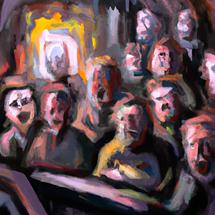
LHC Conspiracy Theories and Fears
In 2009 the Large Hadron Collider (LHC), a giant particle accelerator near Geneva run by CERN, was preparing to restart after upgrades. Scientists said the machine would smash protons together at very high energies to study fundamental particles and forces, potentially revealing phenomena such as the Higgs boson or signs of new physics. However, some members of the public expressed fear that the machine could produce catastrophic effects, including miniature black holes or other unknown dangers.

Laughter benefits heart health significantly
Researchers presented new findings at the European Society of Cardiology meeting showing that laughter therapy can improve some measures of heart health in people with coronary artery disease. In the study, patients took part in guided laughter sessions while researchers measured inflammation markers and cardiovascular performance before and after. The reported results included lower inflammation and improved indicators of heart function after the laughter interventions.

Meta Closes 9,000 Chinese Accounts
Meta announced it has closed nearly 9,000 Facebook and Instagram accounts linked to a Chinese political influence operation called 'Spamouflage.' The company says the network posted material that praised China while criticizing the United States, Western governments, and outspoken critics of the Chinese government. Meta removed the accounts after an investigation that identified coordinated posting patterns and account connections tied to operators in China, calling the activity inauthentic and aimed at manipulating online discussion.

Accessory has no sleep benefits
Researchers reviewing clinical trials have found little evidence that blue‑light filtering glasses provide the sleep or short‑term eye‑comfort benefits often claimed by makers and some retailers. The review pooled data from 17 randomized trials and reported no consistent short‑term reduction in visual fatigue from computer use, and it could not show clear benefits for sleep quality, vision performance, or long‑term retinal health.