Build a conspiracy theory from scratch.
The best way to learn to spot a conspiracy theory is to make one yourself.
Pick a real news story. On the next step you'll choose who's behind it and why. Then walk through the four moves real conspiracists use, with a debunk on every step.
- Hunt anomalies — turn coincidence into evidence of a secret plot.
- Fabricate connections — draw lines between unrelated dots until they look meaningful.
- Dismiss counter-evidence — if a fact disagrees, make the fact part of the cover-up.
- Discredit the critics — dismiss people who point out flaws in your theory.
Pick the event.
Choose whichever real-feeling headline your imagination will run wildest with. Don't overthink it.
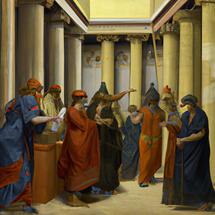
Fixing the British Museum's Anachronism
The British Museum is dealing with a major internal crisis after allegations that a senior curator removed and sold roughly 2,000 items from its collection via eBay. Reports say the revelations prompted the museum director to resign and have led to calls for an independent review. The case has drawn attention to weaknesses in oversight and controls at one of the world’s largest museums, raising questions about how objects are tracked and safeguarded.

Spanish town's streets turn tomato-red
Spain's annual Tomatina festival draws thousands each year to the town of Buñol, where participants playfully pelt one another with overripe tomatoes. This year about 15,000 people, many tourists, threw roughly 120 tonnes of fruit, turning streets and buildings into red pulp. The event lasts about an hour, and people commonly wear goggles and old clothes; there is a small participation fee of about €12 to help manage the crowd.

West's Voters Divided by Identity
A recent YouGov–Cambridge Globalism Project survey finds that voters in Western democracies are more divided by identity and partisan loyalty than by specific policy positions. Researchers describe strong "affective polarization": people feel intense dislike for opposing groups even when those groups often share similar views on key debates such as sexism, racism, and economic policy. The findings challenge the idea that culture wars are mainly about conflicting opinions; instead, much conflict appears driven by who people see as "us" versus "them."

Boost Content Production in 2023
In 2023, businesses and creators faced a crowded online environment where standing out required more content without losing quality. A Forbes article outlines practical tactics to increase output: use AI tools for image creation, conduct batch keyword research, write concise pieces, repurpose existing material, and publish across multiple channels. The aim is to publish more consistently while keeping useful information and audience needs central to each piece.