Build a conspiracy theory from scratch.
The best way to learn to spot a conspiracy theory is to make one yourself.
Pick a real news story. On the next step you'll choose who's behind it and why. Then walk through the four moves real conspiracists use, with a debunk on every step.
- Hunt anomalies — turn coincidence into evidence of a secret plot.
- Fabricate connections — draw lines between unrelated dots until they look meaningful.
- Dismiss counter-evidence — if a fact disagrees, make the fact part of the cover-up.
- Discredit the critics — dismiss people who point out flaws in your theory.
Pick the event.
Choose whichever real-feeling headline your imagination will run wildest with. Don't overthink it.
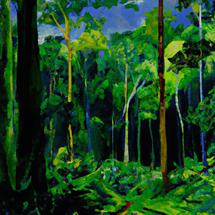
Brazil Amazon deforestation drops 60 percent
Brazil reported a major fall in Amazon deforestation in July: official figures say tree-clearing and burning dropped about 60 percent compared with the same month last year. The government and the environment minister attribute the decline to political changes and new administration policies, based on national monitoring systems. Scientists caution this reflects a single month and that short-term figures can be influenced by seasonal and reporting factors.
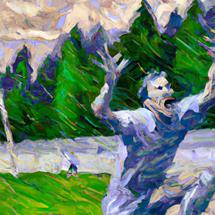
Footballer stole Munch's Scream painting
In 1994 Pål Enger, a former Norwegian footballer, carried out a high-profile theft of Edvard Munch's famous painting The Scream from the National Gallery in Oslo. Enger entered the museum and removed the canvas in a theft that quickly made international headlines. The painting is one of Munch's best-known works, and its disappearance drew intense media and police attention because of its cultural significance and the bold manner in which it was taken.
1,300 languages ranked by complexity
Linguists have long thought that social context shapes grammar: communities with many non-native speakers, like trade hubs, were believed to favor simpler, easier-to-learn systems, while isolated, homogenous groups develop dense, specialized grammatical rules. A new study compiled measurements across about 1,300 languages to test whether languages used mainly by “societies of strangers” indeed show reduced grammatical complexity compared with languages used in more stable, insider communities.
West's Voters Divided by Identity
A recent YouGov–Cambridge Globalism Project survey finds that voters in Western democracies are more divided by identity and partisan loyalty than by specific policy positions. Researchers describe strong "affective polarization": people feel intense dislike for opposing groups even when those groups often share similar views on key debates such as sexism, racism, and economic policy. The findings challenge the idea that culture wars are mainly about conflicting opinions; instead, much conflict appears driven by who people see as "us" versus "them."