Build a conspiracy theory from scratch.
The best way to learn to spot a conspiracy theory is to make one yourself.
Pick a real news story. On the next step you'll choose who's behind it and why. Then walk through the four moves real conspiracists use, with a debunk on every step.
- Hunt anomalies — turn coincidence into evidence of a secret plot.
- Fabricate connections — draw lines between unrelated dots until they look meaningful.
- Dismiss counter-evidence — if a fact disagrees, make the fact part of the cover-up.
- Discredit the critics — dismiss people who point out flaws in your theory.
Pick the event.
Choose whichever real-feeling headline your imagination will run wildest with. Don't overthink it.

Video games aid paralyzed speech
Researchers at Speech Graphics, UC San Francisco and UC Berkeley report a brain–computer interface that helped a woman who lost speech after a stroke communicate again. Tiny electrodes were placed on the surface of her brain to record neural activity while she attempted to speak. That recorded activity was decoded into written text, a synthetic voice and real-time facial animation using software originally developed for video-game characters such as those in The Last of Us Part II and Hogwarts Legacy.

Revive extinct creatures: big debate?
Scientists and conservationists are debating de-extinction, the idea of bringing extinct species back using modern genetic tools. Advances such as PCR, genome sequencing and gene editing have made it technically plausible to reconstruct genomes from preserved DNA. Companies like Colossal Biosciences aim to use these methods to create proxy woolly mammoths by editing Asiatic elephant DNA. Proponents argue such projects could help restore lost ecological functions and biodiversity.

Jagger: Rock legend turned "Instagram Normie
Mick Jagger, the longtime frontman of the Rolling Stones, has been sharing unexpectedly ordinary moments from his tour life on Instagram. Instead of the usual glamorous or staged celebrity photos, his feed shows mundane outings—visits to local attractions, bars, strip malls and well‑known landmarks. He told The Washington Post that these images are less about spectacle and more about getting a feel for places, and he treats the account like a simple visual diary.
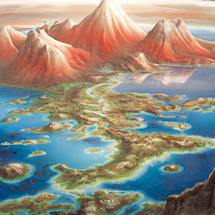
Lost continent discovered
Geoscientists have identified a largely submerged landmass called Zealandia, or Te Riu-a-Māui, that meets the criteria many researchers use for a continent. Covering about 1.89 million square miles (roughly 4.9 million square kilometres), Zealandia is mostly underwater — about 90–95 percent — and includes the visible islands of New Zealand and New Caledonia. Debate about its status grew over decades and many geologists accepted it as a continent in analyses published in recent years.