Build a conspiracy theory from scratch.
The best way to learn to spot a conspiracy theory is to make one yourself.
Pick a real news story. On the next step you'll choose who's behind it and why. Then walk through the four moves real conspiracists use, with a debunk on every step.
- Hunt anomalies — turn coincidence into evidence of a secret plot.
- Fabricate connections — draw lines between unrelated dots until they look meaningful.
- Dismiss counter-evidence — if a fact disagrees, make the fact part of the cover-up.
- Discredit the critics — dismiss people who point out flaws in your theory.
Pick the event.
Choose whichever real-feeling headline your imagination will run wildest with. Don't overthink it.

Mastering Humor: Timing, Delivery, Connection
Comedy writers and performers say telling a good joke is harder than it looks: timing and delivery can make or break a punchline. Jokes work by surprising the listener with an unexpected twist, clever wordplay, or absurd imagery that creates a vivid mental picture. Short, sharp jokes often land best because they set up an idea quickly and then flip it — for example, an Edinburgh Fringe-winning pun: "I started dating a zookeeper, but it turned out he was a cheetah."
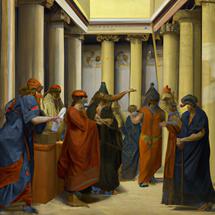
Fixing the British Museum's Anachronism
The British Museum is dealing with a major internal crisis after allegations that a senior curator removed and sold roughly 2,000 items from its collection via eBay. Reports say the revelations prompted the museum director to resign and have led to calls for an independent review. The case has drawn attention to weaknesses in oversight and controls at one of the world’s largest museums, raising questions about how objects are tracked and safeguarded.

Apple Teaching Siri Lip Reading
Apple has filed a patent application that describes using motion sensing to detect lip and head movements so Siri could recognize commands without relying only on a microphone. The filing, titled "Keyword Detection Using Motion Sensing," explains how analyzing mouth shapes and subtle head motions might identify common phrases, which could help the assistant work better in noisy environments or avoid false activations from background speech.

Australia warns of climate disruptions
An Australian thinktank, the Breakthrough National Centre for Climate Restoration, has warned federal politicians that climate change could cause widespread disruption across the Asia‑Pacific by mid‑century. Its briefing sketches scenarios including failed states, large movements of people fleeing uninhabitable areas, and growing competition for scarce resources such as fresh water. The group says these shifts could trigger regional instability, economic shocks and damage to critical infrastructure, underlining the scale of the risk.