Build a conspiracy theory from scratch.
The best way to learn to spot a conspiracy theory is to make one yourself.
Pick a real news story. On the next step you'll choose who's behind it and why. Then walk through the four moves real conspiracists use, with a debunk on every step.
- Hunt anomalies — turn coincidence into evidence of a secret plot.
- Fabricate connections — draw lines between unrelated dots until they look meaningful.
- Dismiss counter-evidence — if a fact disagrees, make the fact part of the cover-up.
- Discredit the critics — dismiss people who point out flaws in your theory.
Pick the event.
Choose whichever real-feeling headline your imagination will run wildest with. Don't overthink it.

More work on domestic women's rights
A YouGov–Cambridge Globalism Project survey asked people in many Western countries whether more should be done to improve women’s rights at home. In several nations a clear majority or near-majority said yes. Italians topped the list at 62%, followed by Spaniards at 60%, Hungarians at 57% and Swedes at 56%. Other countries where roughly half of respondents expressed concern included Poland, France, Canada, Australia and Greece.
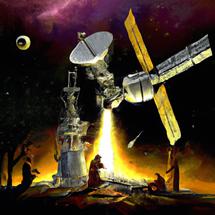
India launching Sun-bound spacecraft.
India’s space agency ISRO plans to launch Aditya-L1, a satellite designed to observe the Sun, on 2 September. The spacecraft will travel to the Sun–Earth Lagrange Point 1, about 1.5 million kilometres from Earth, where it can keep the Sun continuously in view. The mission follows India’s successful Chandrayaan-3 Moon landing and represents a major step in the country’s expanding space programme, aimed at improving understanding of solar activity.
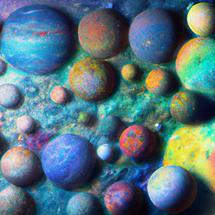
Ocean Materials from Outside Solar System
Harvard astronomer Avi Loeb says researchers recovered small metallic spheres from the Pacific Ocean in June and that the material came from outside our solar system. Loeb connects the spheres to an object that reportedly struck Earth in 2014 and argues their composition and structure are unusual enough to suggest an extraterrestrial, possibly technological, origin. The claim is presented as a potential example of interstellar material reaching Earth.

Laughter benefits heart health significantly
Researchers presented new findings at the European Society of Cardiology meeting showing that laughter therapy can improve some measures of heart health in people with coronary artery disease. In the study, patients took part in guided laughter sessions while researchers measured inflammation markers and cardiovascular performance before and after. The reported results included lower inflammation and improved indicators of heart function after the laughter interventions.