Build a conspiracy theory from scratch.
The best way to learn to spot a conspiracy theory is to make one yourself.
Pick a real news story. On the next step you'll choose who's behind it and why. Then walk through the four moves real conspiracists use, with a debunk on every step.
- Hunt anomalies — turn coincidence into evidence of a secret plot.
- Fabricate connections — draw lines between unrelated dots until they look meaningful.
- Dismiss counter-evidence — if a fact disagrees, make the fact part of the cover-up.
- Discredit the critics — dismiss people who point out flaws in your theory.
Pick the event.
Choose whichever real-feeling headline your imagination will run wildest with. Don't overthink it.
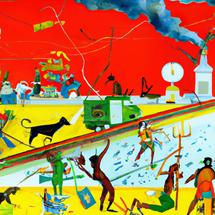
Humanity Breaks Climate Records
In 2023 many regions experienced unusually severe heat, droughts, floods and storms. The Guardian surveyed 45 climate scientists worldwide who say these extreme events align with long-standing scientific predictions about global warming. However, the impacts are happening faster and more intensely than many models had forecast, in part because the return of El Niño is amplifying heat and weather extremes this year.
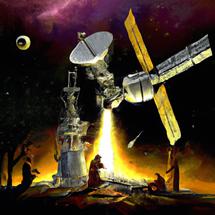
India launching Sun-bound spacecraft.
India’s space agency ISRO plans to launch Aditya-L1, a satellite designed to observe the Sun, on 2 September. The spacecraft will travel to the Sun–Earth Lagrange Point 1, about 1.5 million kilometres from Earth, where it can keep the Sun continuously in view. The mission follows India’s successful Chandrayaan-3 Moon landing and represents a major step in the country’s expanding space programme, aimed at improving understanding of solar activity.
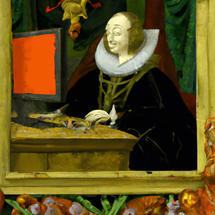
Video games aid paralyzed speech
Researchers at Speech Graphics, UC San Francisco and UC Berkeley report a brain–computer interface that helped a woman who lost speech after a stroke communicate again. Tiny electrodes were placed on the surface of her brain to record neural activity while she attempted to speak. That recorded activity was decoded into written text, a synthetic voice and real-time facial animation using software originally developed for video-game characters such as those in The Last of Us Part II and Hogwarts Legacy.
Irregular sleep linked to gut bacteria
Researchers at King’s College London have reported links between irregular sleep patterns and changes in the gut microbiome. The study focused on “social jet lag,” where people shift their sleep timing between workdays and free days. Even a 90‑minute difference in the midpoint of sleep was associated with a microbiome profile that other studies have connected to poorer health, and the team also found associations with diet quality, eating habits and inflammation.