Build a conspiracy theory from scratch.
The best way to learn to spot a conspiracy theory is to make one yourself.
Pick a real news story. On the next step you'll choose who's behind it and why. Then walk through the four moves real conspiracists use, with a debunk on every step.
- Hunt anomalies — turn coincidence into evidence of a secret plot.
- Fabricate connections — draw lines between unrelated dots until they look meaningful.
- Dismiss counter-evidence — if a fact disagrees, make the fact part of the cover-up.
- Discredit the critics — dismiss people who point out flaws in your theory.
Pick the event.
Choose whichever real-feeling headline your imagination will run wildest with. Don't overthink it.
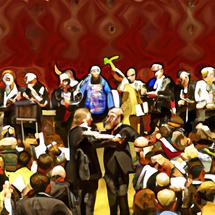
CPAC Europe embraces right-wing authoritarians
CPAC Hungary, the Budapest edition of the Conservative Political Action Conference, gathered American and European conservative activists, politicians, and commentators to discuss what organizers called the decline of Western civilization. Sessions focused on immigration, resistance to progressive social policies, and critiques of liberal democracy. Hungary’s prime minister Viktor Orbán was a prominent speaker, and some remarks echoed the “great replacement” language while emphasizing national sovereignty and cultural preservation.

West's Voters Divided by Identity
A recent YouGov–Cambridge Globalism Project survey finds that voters in Western democracies are more divided by identity and partisan loyalty than by specific policy positions. Researchers describe strong "affective polarization": people feel intense dislike for opposing groups even when those groups often share similar views on key debates such as sexism, racism, and economic policy. The findings challenge the idea that culture wars are mainly about conflicting opinions; instead, much conflict appears driven by who people see as "us" versus "them."
Exercise Prevents Heart Rhythm Disorder
Researchers studying more than 15,000 people report that higher physical fitness is linked to a lower chance of developing atrial fibrillation, an irregular heartbeat that raises the risk of stroke fivefold. The study, presented at the ESC Congress 2023, used treadmill exercise tests to estimate fitness in metabolic equivalents (METs) and followed participants over time to see who developed heart rhythm problems or strokes.

China Urges UK Return Artifacts
China’s state-run Global Times published an editorial urging the British Museum to return Chinese artifacts just ahead of a visit by UK Foreign Secretary James Cleverly. The piece accused the museum of holding items acquired through improper channels and called some pieces “stolen.” The British Museum’s collection includes more than 23,000 Chinese objects, and the editorial named examples such as the painting The Admonitions of the Instructress to the Court Ladies and Liao tri-coloured luohan statues.