Build a conspiracy theory from scratch.
The best way to learn to spot a conspiracy theory is to make one yourself.
Pick a real news story. On the next step you'll choose who's behind it and why. Then walk through the four moves real conspiracists use, with a debunk on every step.
- Hunt anomalies — turn coincidence into evidence of a secret plot.
- Fabricate connections — draw lines between unrelated dots until they look meaningful.
- Dismiss counter-evidence — if a fact disagrees, make the fact part of the cover-up.
- Discredit the critics — dismiss people who point out flaws in your theory.
Pick the event.
Choose whichever real-feeling headline your imagination will run wildest with. Don't overthink it.

Video games aid paralyzed speech
Researchers at Speech Graphics, UC San Francisco and UC Berkeley report a brain–computer interface that helped a woman who lost speech after a stroke communicate again. Tiny electrodes were placed on the surface of her brain to record neural activity while she attempted to speak. That recorded activity was decoded into written text, a synthetic voice and real-time facial animation using software originally developed for video-game characters such as those in The Last of Us Part II and Hogwarts Legacy.

Tools Reveal Hidden Website History
Online tools now let anyone view past versions of websites, exposing changes that site owners may have made over time. The Wayback Machine at archive.org stores snapshots of millions of pages, while archive.today preserves copies that sometimes survive when other archives don’t. The Memento Project links these services and helps users search by URL and date, making it easier to see how pages, policies, and content evolved.
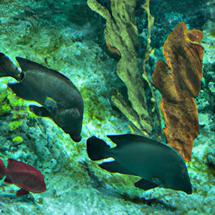
Fish sees with skin posthumously
Researchers report that reef-dwelling hogfish have light-sensitive cells embedded in their skin, allowing the animals to sense brightness and adjust their colour without relying solely on eyes. The study, published in Nature, shows this skin-based photoreception can continue to influence colour change even after death. Hogfish live in Atlantic reefs and can shift hues in milliseconds. Those rapid changes aid camouflage, social signalling and may help with temperature regulation and attracting mates.

AI aids early heart failure detection
Scientists presented results from the OPERA study showing artificial intelligence can analyze heart ultrasound scans in about one minute, compared with roughly 30 minutes for trained human experts. The project, led by the University of Glasgow in partnership with AstraZeneca and NHS trusts including Greater Glasgow & Clyde and the Golden Jubilee, demonstrated the AI’s ability to interpret echocardiograms quickly and consistently during a presentation at the European Society of Cardiology conference in Amsterdam.