Build a conspiracy theory from scratch.
The best way to learn to spot a conspiracy theory is to make one yourself.
Pick a real news story. On the next step you'll choose who's behind it and why. Then walk through the four moves real conspiracists use, with a debunk on every step.
- Hunt anomalies — turn coincidence into evidence of a secret plot.
- Fabricate connections — draw lines between unrelated dots until they look meaningful.
- Dismiss counter-evidence — if a fact disagrees, make the fact part of the cover-up.
- Discredit the critics — dismiss people who point out flaws in your theory.
Pick the event.
Choose whichever real-feeling headline your imagination will run wildest with. Don't overthink it.

Australia warns of climate disruptions
An Australian thinktank, the Breakthrough National Centre for Climate Restoration, has warned federal politicians that climate change could cause widespread disruption across the Asia‑Pacific by mid‑century. Its briefing sketches scenarios including failed states, large movements of people fleeing uninhabitable areas, and growing competition for scarce resources such as fresh water. The group says these shifts could trigger regional instability, economic shocks and damage to critical infrastructure, underlining the scale of the risk.
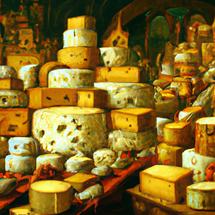
World's priciest cheese record broken.
Spain’s cabrales blue cheese set a new world record when a 2.2kg wheel sold at auction for €30,000, making it officially the most expensive cheese ever sold. The wheel took the top prize at the Principality of Asturias’ annual cabrales competition, and the high bid surpassed the previous record. Reporters say the buyer was the same restaurant owner who paid the earlier record price in 2019.
LHC Conspiracy Theories and Fears
In 2009 the Large Hadron Collider (LHC), a giant particle accelerator near Geneva run by CERN, was preparing to restart after upgrades. Scientists said the machine would smash protons together at very high energies to study fundamental particles and forces, potentially revealing phenomena such as the Higgs boson or signs of new physics. However, some members of the public expressed fear that the machine could produce catastrophic effects, including miniature black holes or other unknown dangers.

Many Europeans Want to End Daylight Saving Time
As clocks move forward each spring across the northern hemisphere, debates over daylight saving time continue in several Western European countries. YouGov's Eurotrack survey asked people in Britain, Denmark, France, Germany, Italy, Spain and Sweden whether their country should stop switching clocks twice a year. Responses vary widely: 75% of Germans want to end the practice, while Italy is the only country where a majority (56%) prefers to keep changing the clocks. Britain and Spain were narrowly divided on the question.