Build a conspiracy theory from scratch.
The best way to learn to spot a conspiracy theory is to make one yourself.
Pick a real news story. On the next step you'll choose who's behind it and why. Then walk through the four moves real conspiracists use, with a debunk on every step.
- Hunt anomalies — turn coincidence into evidence of a secret plot.
- Fabricate connections — draw lines between unrelated dots until they look meaningful.
- Dismiss counter-evidence — if a fact disagrees, make the fact part of the cover-up.
- Discredit the critics — dismiss people who point out flaws in your theory.
Pick the event.
Choose whichever real-feeling headline your imagination will run wildest with. Don't overthink it.
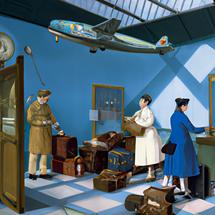
Airline to weigh passengers pre-flight.
South Korea's flag carrier Korean Air will begin weighing passengers and their carry-on luggage at Gimpo and Incheon airports. The Ministry of Land, Infrastructure and Transportation has required the checks to collect actual passenger weights for aircraft weight-and-balance calculations. Airline officials say measuring passengers helps crews calculate load distribution, takeoff performance, and fuel needs more accurately than relying on assumed average weights. Officials emphasize it is about technical calculations, not personal data collection.
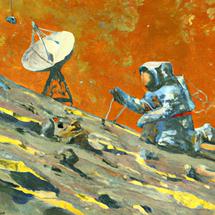
China's Moon discovery reveals hidden structures
China's Chang'e-4 lander touched down on the Moon's far side in January 2019. Using instruments including ground-penetrating radar, the mission collected subsurface profiles near its landing site. A team writing in the Journal of Geophysical Research: Planets reports the top roughly 130 feet (about 40 metres) of the surface is layered—alternating dust, soil and broken rock—and that a buried impact crater lies within those layers.

Mastering Humor: Timing, Delivery, Connection
Comedy writers and performers say telling a good joke is harder than it looks: timing and delivery can make or break a punchline. Jokes work by surprising the listener with an unexpected twist, clever wordplay, or absurd imagery that creates a vivid mental picture. Short, sharp jokes often land best because they set up an idea quickly and then flip it — for example, an Edinburgh Fringe-winning pun: "I started dating a zookeeper, but it turned out he was a cheetah."
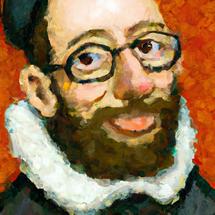
The Dictionary People" Review: Word-Loving Nerds
Sarah Ogilvie’s The Dictionary People tells the story of the people who built the Oxford English Dictionary by collecting words, quotations, and regional usages. Ogilvie, a linguist, shows that the OED was not made by a single team in isolation but by thousands of volunteers who sent slips of paper and examples from newspapers, books, and everyday speech. The book explains how this wide network of contributors helped record English across time and place.