Build a conspiracy theory from scratch.
The best way to learn to spot a conspiracy theory is to make one yourself.
Pick a real news story. On the next step you'll choose who's behind it and why. Then walk through the four moves real conspiracists use, with a debunk on every step.
- Hunt anomalies — turn coincidence into evidence of a secret plot.
- Fabricate connections — draw lines between unrelated dots until they look meaningful.
- Dismiss counter-evidence — if a fact disagrees, make the fact part of the cover-up.
- Discredit the critics — dismiss people who point out flaws in your theory.
Pick the event.
Choose whichever real-feeling headline your imagination will run wildest with. Don't overthink it.
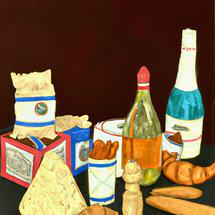
Ultra-processed foods increase health risks
Two new studies presented at the European Society of Cardiology’s annual meeting found links between consuming ultra-processed foods and higher risks of heart disease, including heart attacks and strokes. Ultra-processed foods are widely available consumer items such as fizzy drinks, many breakfast cereals, packaged snacks and ready-made meals. One analysis reported that a 10 percent increase in daily ultra-processed food intake was associated with about a 6 percent rise in risk of cardiovascular disease.
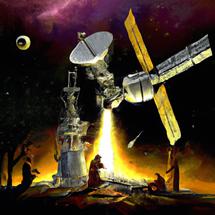
India launching Sun-bound spacecraft.
India’s space agency ISRO plans to launch Aditya-L1, a satellite designed to observe the Sun, on 2 September. The spacecraft will travel to the Sun–Earth Lagrange Point 1, about 1.5 million kilometres from Earth, where it can keep the Sun continuously in view. The mission follows India’s successful Chandrayaan-3 Moon landing and represents a major step in the country’s expanding space programme, aimed at improving understanding of solar activity.

Cooking's chemical reaction aided life's origin
The Maillard reaction is the chemical process that browns food and creates complex flavors when we cook. New research led by Professor Caroline Peacock at the University of Leeds reports that a similar reaction can occur in the deep ocean. There, it converts small organic carbon molecules into larger, stable polymers. The study, published in Nature, estimates this process locks away roughly four million tonnes of organic carbon each year.
Video games aid paralyzed speech
Researchers at Speech Graphics, UC San Francisco and UC Berkeley report a brain–computer interface that helped a woman who lost speech after a stroke communicate again. Tiny electrodes were placed on the surface of her brain to record neural activity while she attempted to speak. That recorded activity was decoded into written text, a synthetic voice and real-time facial animation using software originally developed for video-game characters such as those in The Last of Us Part II and Hogwarts Legacy.