Build a conspiracy theory from scratch.
The best way to learn to spot a conspiracy theory is to make one yourself.
Pick a real news story. On the next step you'll choose who's behind it and why. Then walk through the four moves real conspiracists use, with a debunk on every step.
- Hunt anomalies — turn coincidence into evidence of a secret plot.
- Fabricate connections — draw lines between unrelated dots until they look meaningful.
- Dismiss counter-evidence — if a fact disagrees, make the fact part of the cover-up.
- Discredit the critics — dismiss people who point out flaws in your theory.
Pick the event.
Choose whichever real-feeling headline your imagination will run wildest with. Don't overthink it.

Influential marketing leaders shaping creators
Rolling Stone and Captiv8 published a feature identifying twenty marketing leaders they say are shaping the fast-growing creator economy. The article explains how marketers connect creators, brands, and audiences by promoting branded content and designing experiences that reach large online followings. As entertainment shifts from traditional media to creator-driven platforms, marketers are increasingly responsible for deciding which creators gain visibility and how brand partnerships enter cultural conversations.
Google Search Update: UI Revamp
Google is expanding a tool called "Results about you," first introduced last year to help people remove personal information from Search results. The new version will actively scan the public web for instances of a user’s personal data and send alerts so they can request removal. Google says the feature is currently available in the United States in English and will be rolled out to more regions over time.
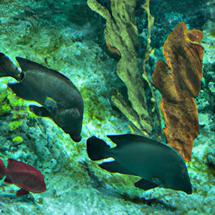
Fish sees with skin posthumously
Researchers report that reef-dwelling hogfish have light-sensitive cells embedded in their skin, allowing the animals to sense brightness and adjust their colour without relying solely on eyes. The study, published in Nature, shows this skin-based photoreception can continue to influence colour change even after death. Hogfish live in Atlantic reefs and can shift hues in milliseconds. Those rapid changes aid camouflage, social signalling and may help with temperature regulation and attracting mates.

Video games aid paralyzed speech
Researchers at Speech Graphics, UC San Francisco and UC Berkeley report a brain–computer interface that helped a woman who lost speech after a stroke communicate again. Tiny electrodes were placed on the surface of her brain to record neural activity while she attempted to speak. That recorded activity was decoded into written text, a synthetic voice and real-time facial animation using software originally developed for video-game characters such as those in The Last of Us Part II and Hogwarts Legacy.