Build a conspiracy theory from scratch.
The best way to learn to spot a conspiracy theory is to make one yourself.
Pick a real news story. On the next step you'll choose who's behind it and why. Then walk through the four moves real conspiracists use, with a debunk on every step.
- Hunt anomalies — turn coincidence into evidence of a secret plot.
- Fabricate connections — draw lines between unrelated dots until they look meaningful.
- Dismiss counter-evidence — if a fact disagrees, make the fact part of the cover-up.
- Discredit the critics — dismiss people who point out flaws in your theory.
Pick the event.
Choose whichever real-feeling headline your imagination will run wildest with. Don't overthink it.
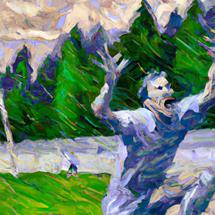
Footballer stole Munch's Scream painting
In 1994 Pål Enger, a former Norwegian footballer, carried out a high-profile theft of Edvard Munch's famous painting The Scream from the National Gallery in Oslo. Enger entered the museum and removed the canvas in a theft that quickly made international headlines. The painting is one of Munch's best-known works, and its disappearance drew intense media and police attention because of its cultural significance and the bold manner in which it was taken.

Tools Reveal Hidden Website History
Online tools now let anyone view past versions of websites, exposing changes that site owners may have made over time. The Wayback Machine at archive.org stores snapshots of millions of pages, while archive.today preserves copies that sometimes survive when other archives don’t. The Memento Project links these services and helps users search by URL and date, making it easier to see how pages, policies, and content evolved.

Pandemic Hits Women and Youth's Mental Health
A YouGov survey carried out in 27 countries finds the Covid-19 pandemic has had the most severe mental-health effects on young people and on women. Younger respondents consistently reported higher levels of anxiety about their mental health and increased worries about their financial futures, while women were more likely than men to say the pandemic had harmed their wellbeing. The findings summarize self-reported experiences rather than identifying precise causes.

Naps Reflect Young Brain Development
During the 2020 lockdown, researchers at the University of East Anglia studied 463 infants aged about eight months to three years to examine nap habits and learning. They tested vocabulary and other cognitive measures and tracked how often and how long children slept. The study found that some children consolidated information during sleep and therefore napped less often, while others who had smaller vocabularies napped more frequently and for longer periods.