Build a conspiracy theory from scratch.
The best way to learn to spot a conspiracy theory is to make one yourself.
Pick a real news story. On the next step you'll choose who's behind it and why. Then walk through the four moves real conspiracists use, with a debunk on every step.
- Hunt anomalies — turn coincidence into evidence of a secret plot.
- Fabricate connections — draw lines between unrelated dots until they look meaningful.
- Dismiss counter-evidence — if a fact disagrees, make the fact part of the cover-up.
- Discredit the critics — dismiss people who point out flaws in your theory.
Pick the event.
Choose whichever real-feeling headline your imagination will run wildest with. Don't overthink it.
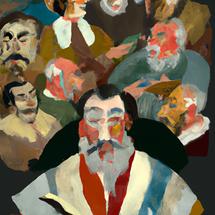
1,300 languages ranked by complexity
Linguists have long thought that social context shapes grammar: communities with many non-native speakers, like trade hubs, were believed to favor simpler, easier-to-learn systems, while isolated, homogenous groups develop dense, specialized grammatical rules. A new study compiled measurements across about 1,300 languages to test whether languages used mainly by “societies of strangers” indeed show reduced grammatical complexity compared with languages used in more stable, insider communities.

Influential marketing leaders shaping creators
Rolling Stone and Captiv8 published a feature identifying twenty marketing leaders they say are shaping the fast-growing creator economy. The article explains how marketers connect creators, brands, and audiences by promoting branded content and designing experiences that reach large online followings. As entertainment shifts from traditional media to creator-driven platforms, marketers are increasingly responsible for deciding which creators gain visibility and how brand partnerships enter cultural conversations.
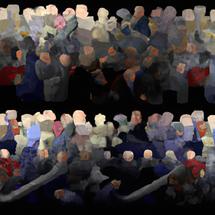
Populist Support Declines in Europe
An annual YouGov-Cambridge Globalism Project survey, reported by The Guardian, finds that support for populist ideas has fallen across several European countries over the past three years. The survey measures attitudes like distrust of elites, favoring strong national control, and opposition to immigration. In the latest cycle, populist sentiment declined in ten European nations, indicating fewer people now express broad populist beliefs than in earlier years.

Plants emit audible sounds when injured
Researchers led by Itzhak Khait at Tel Aviv University have found that some plants produce audible, high-frequency sounds when they are stressed or damaged. The team tested tomato and tobacco plants and recorded ultrasonic clicks that arise during drought stress or after cutting. Sensitive microphones and acoustic analysis allowed detection of these sounds from as far as five meters, suggesting plants may broadcast information about their physical condition.