Build a conspiracy theory from scratch.
The best way to learn to spot a conspiracy theory is to make one yourself.
Pick a real news story. On the next step you'll choose who's behind it and why. Then walk through the four moves real conspiracists use, with a debunk on every step.
- Hunt anomalies — turn coincidence into evidence of a secret plot.
- Fabricate connections — draw lines between unrelated dots until they look meaningful.
- Dismiss counter-evidence — if a fact disagrees, make the fact part of the cover-up.
- Discredit the critics — dismiss people who point out flaws in your theory.
Pick the event.
Choose whichever real-feeling headline your imagination will run wildest with. Don't overthink it.

Naps Reflect Young Brain Development
During the 2020 lockdown, researchers at the University of East Anglia studied 463 infants aged about eight months to three years to examine nap habits and learning. They tested vocabulary and other cognitive measures and tracked how often and how long children slept. The study found that some children consolidated information during sleep and therefore napped less often, while others who had smaller vocabularies napped more frequently and for longer periods.
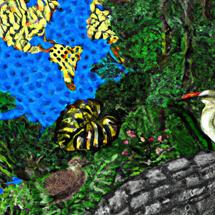
Wealthy Nations Urged to Contribute
A new international nature fund set up under the Global Environment Facility aims to help developing countries meet the biodiversity targets agreed at the COP15 summit in Montreal. The fund’s creation was one of the most-contentious issues at those talks, prompting walkouts and repeated negotiations between wealthy and poorer nations. So far, only Canada and the United Kingdom have pledged money, leaving roughly $40 million still needed to capitalise the fund ahead of COP16 next year.

Promote longevity through lifestyle choices
Scientists and doctors point out that many health problems run in families, and the diseases now affecting older baby boomers can offer a warning about what people might face later in life. Advances in DNA sequencing make it possible to find gene variants that raise the chances of heart disease, diabetes and some cancers. Identifying those risks early gives doctors and patients options for monitoring, preventive treatment and tailored medical care.
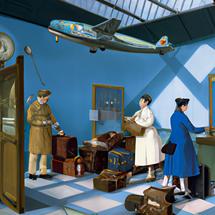
Airline to weigh passengers pre-flight.
South Korea's flag carrier Korean Air will begin weighing passengers and their carry-on luggage at Gimpo and Incheon airports. The Ministry of Land, Infrastructure and Transportation has required the checks to collect actual passenger weights for aircraft weight-and-balance calculations. Airline officials say measuring passengers helps crews calculate load distribution, takeoff performance, and fuel needs more accurately than relying on assumed average weights. Officials emphasize it is about technical calculations, not personal data collection.