Build a conspiracy theory from scratch.
The best way to learn to spot a conspiracy theory is to make one yourself.
Pick a real news story. On the next step you'll choose who's behind it and why. Then walk through the four moves real conspiracists use, with a debunk on every step.
- Hunt anomalies — turn coincidence into evidence of a secret plot.
- Fabricate connections — draw lines between unrelated dots until they look meaningful.
- Dismiss counter-evidence — if a fact disagrees, make the fact part of the cover-up.
- Discredit the critics — dismiss people who point out flaws in your theory.
Pick the event.
Choose whichever real-feeling headline your imagination will run wildest with. Don't overthink it.

Film's production plagued by misfortune
William Friedkin’s 1977 film Sorcerer is a tense thriller about four desperate men hired to transport highly unstable explosives across dangerous, remote roads. Inspired by Georges Arnaud’s novel and echoing the earlier French film The Wages of Fear, Sorcerer aimed for a raw, realistic tone. Friedkin, fresh from the success of The Exorcist, pushed for authentic locations and intense performances to heighten the film’s unrelenting atmosphere.
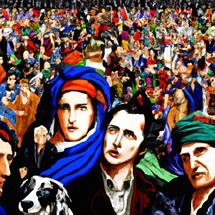
West's Voters Divided by Identity
A recent YouGov–Cambridge Globalism Project survey finds that voters in Western democracies are more divided by identity and partisan loyalty than by specific policy positions. Researchers describe strong "affective polarization": people feel intense dislike for opposing groups even when those groups often share similar views on key debates such as sexism, racism, and economic policy. The findings challenge the idea that culture wars are mainly about conflicting opinions; instead, much conflict appears driven by who people see as "us" versus "them."

Boost Content Production in 2023
In 2023, businesses and creators faced a crowded online environment where standing out required more content without losing quality. A Forbes article outlines practical tactics to increase output: use AI tools for image creation, conduct batch keyword research, write concise pieces, repurpose existing material, and publish across multiple channels. The aim is to publish more consistently while keeping useful information and audience needs central to each piece.
Diller transformed architecture with innovation
Elizabeth Diller is a leading architect and founding partner of Diller Scofidio + Renfro, a firm known for projects that blur art, performance, and architecture. Trained at Cooper Union, she moved from visual art into architecture and co-authored the influential book Flesh, which challenged traditional ideas about buildings and spatial experience. Her work—including the High Line, the Blur Building, and The Shed—emphasizes experimentation, collaboration, and attention to how people use public space.