Build a conspiracy theory from scratch.
The best way to learn to spot a conspiracy theory is to make one yourself.
Pick a real news story. On the next step you'll choose who's behind it and why. Then walk through the four moves real conspiracists use, with a debunk on every step.
- Hunt anomalies — turn coincidence into evidence of a secret plot.
- Fabricate connections — draw lines between unrelated dots until they look meaningful.
- Dismiss counter-evidence — if a fact disagrees, make the fact part of the cover-up.
- Discredit the critics — dismiss people who point out flaws in your theory.
Pick the event.
Choose whichever real-feeling headline your imagination will run wildest with. Don't overthink it.

West's Voters Divided by Identity
A recent YouGov–Cambridge Globalism Project survey finds that voters in Western democracies are more divided by identity and partisan loyalty than by specific policy positions. Researchers describe strong "affective polarization": people feel intense dislike for opposing groups even when those groups often share similar views on key debates such as sexism, racism, and economic policy. The findings challenge the idea that culture wars are mainly about conflicting opinions; instead, much conflict appears driven by who people see as "us" versus "them."
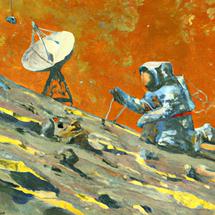
China's Moon discovery reveals hidden structures
China's Chang'e-4 lander touched down on the Moon's far side in January 2019. Using instruments including ground-penetrating radar, the mission collected subsurface profiles near its landing site. A team writing in the Journal of Geophysical Research: Planets reports the top roughly 130 feet (about 40 metres) of the surface is layered—alternating dust, soil and broken rock—and that a buried impact crater lies within those layers.
Loch Ness Monster search resumes
The Loch Ness search, described as the biggest in fifty years, took place over the weekend at Scotland’s Loch Ness. The Loch Ness Centre partnered with Loch Ness Exploration to run the operation and invited volunteers to join boat patrols that ran from about 10 a.m. to 6 p.m. Organizers set up 17 official spotting points around the loch and asked the public to report any unusual sightings to the survey team.
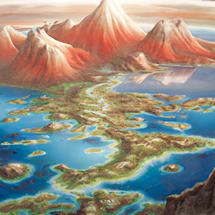
Lost continent discovered
Geoscientists have identified a largely submerged landmass called Zealandia, or Te Riu-a-Māui, that meets the criteria many researchers use for a continent. Covering about 1.89 million square miles (roughly 4.9 million square kilometres), Zealandia is mostly underwater — about 90–95 percent — and includes the visible islands of New Zealand and New Caledonia. Debate about its status grew over decades and many geologists accepted it as a continent in analyses published in recent years.