Build a conspiracy theory from scratch.
The best way to learn to spot a conspiracy theory is to make one yourself.
Pick a real news story. On the next step you'll choose who's behind it and why. Then walk through the four moves real conspiracists use, with a debunk on every step.
- Hunt anomalies — turn coincidence into evidence of a secret plot.
- Fabricate connections — draw lines between unrelated dots until they look meaningful.
- Dismiss counter-evidence — if a fact disagrees, make the fact part of the cover-up.
- Discredit the critics — dismiss people who point out flaws in your theory.
Pick the event.
Choose whichever real-feeling headline your imagination will run wildest with. Don't overthink it.
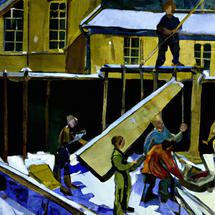
US campus unearths 142-year-old observatory
Workers installing hammock poles on Michigan State University's campus in August 2023 unexpectedly unearthed the buried stone foundation of an old observatory. Built in 1881 and demolished in the 1920s, the small structure had been covered over for decades. Archaeologists and university staff identified the masonry as part of that 19th-century building, making it a notable historical find on a modern college lawn.
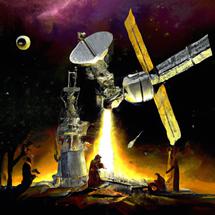
India launching Sun-bound spacecraft.
India’s space agency ISRO plans to launch Aditya-L1, a satellite designed to observe the Sun, on 2 September. The spacecraft will travel to the Sun–Earth Lagrange Point 1, about 1.5 million kilometres from Earth, where it can keep the Sun continuously in view. The mission follows India’s successful Chandrayaan-3 Moon landing and represents a major step in the country’s expanding space programme, aimed at improving understanding of solar activity.
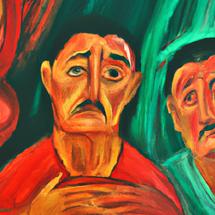
AI aids early heart failure detection
Scientists presented results from the OPERA study showing artificial intelligence can analyze heart ultrasound scans in about one minute, compared with roughly 30 minutes for trained human experts. The project, led by the University of Glasgow in partnership with AstraZeneca and NHS trusts including Greater Glasgow & Clyde and the Golden Jubilee, demonstrated the AI’s ability to interpret echocardiograms quickly and consistently during a presentation at the European Society of Cardiology conference in Amsterdam.
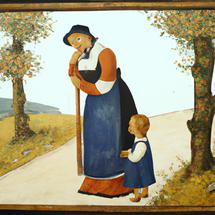
Mozart's Lullaby soothes pain in newborns
A recent study in New York, conducted between April 2019 and February 2020, tested whether recorded music could reduce pain in newborns during routine heel-prick blood tests. Researchers enrolled 100 infants and randomly assigned about half to listen to Mozart’s Lullaby before and during the procedure while the other infants received standard care without the music. Clinicians measured pain using standard scoring tools at baseline, during the prick, and after the procedure to compare responses.